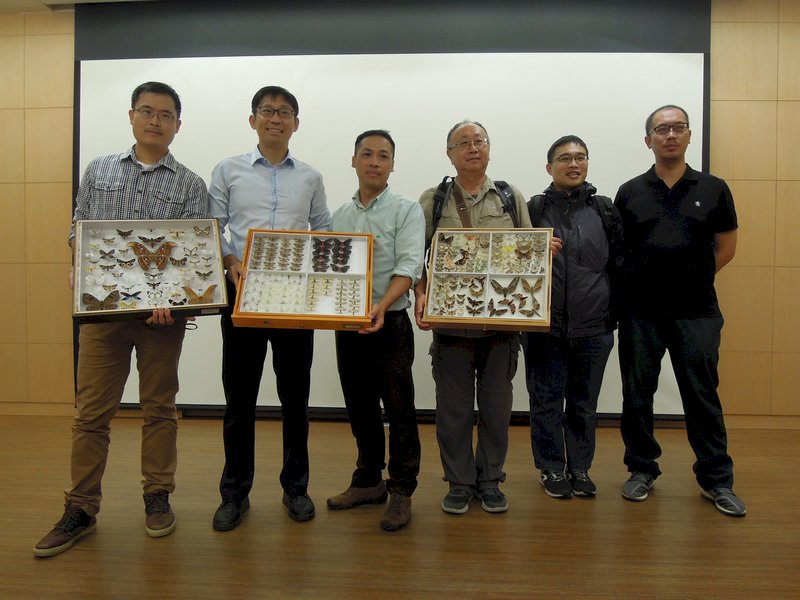
Taiwanese researchers have used artificial intelligence to crack a mystery that has been pondered over by insect experts for more than a century.
The 19th century British natural scientist A. R. Wallace noticed that the coloration of insects seemed to be more diverse at some elevations than others. Could these two factors be linked? Until recently, there was no way to be sure due to a lack of specimens or high quality photographs.
From 2011 to 2016, however, Taiwan’s top research institute, Academia Sinica, assembled a catalogue of data big enough to investigate the question further. With help from volunteers, researchers there collected more than 20,000 specimens and digital images of Taiwanese moths.
Researchers than got the idea to use artificial intelligence to analyze all this data. The artificial intelligence was able to detect minute differences in coloration that human eyes cannot pick out.
At first the artificial intelligence was given the elevation of the place where each photo was taken. After studying enough examples, it was able to figure out how far above sea level other moth photos were taken just by looking at the moths’ coloration.
The results of the research were published October 7 in the journal Nature Communications.