The Cantonese lion dance from southern China is widely known around the world. But it’s not the only style of lion dance there is in East Asia.
Taiwan’s Hakka people, too, have a distinct type of lion dance. It’s a style that’s unfortunately at risk of disappearing, but not everyone has lost hope in the struggle to keep it alive.
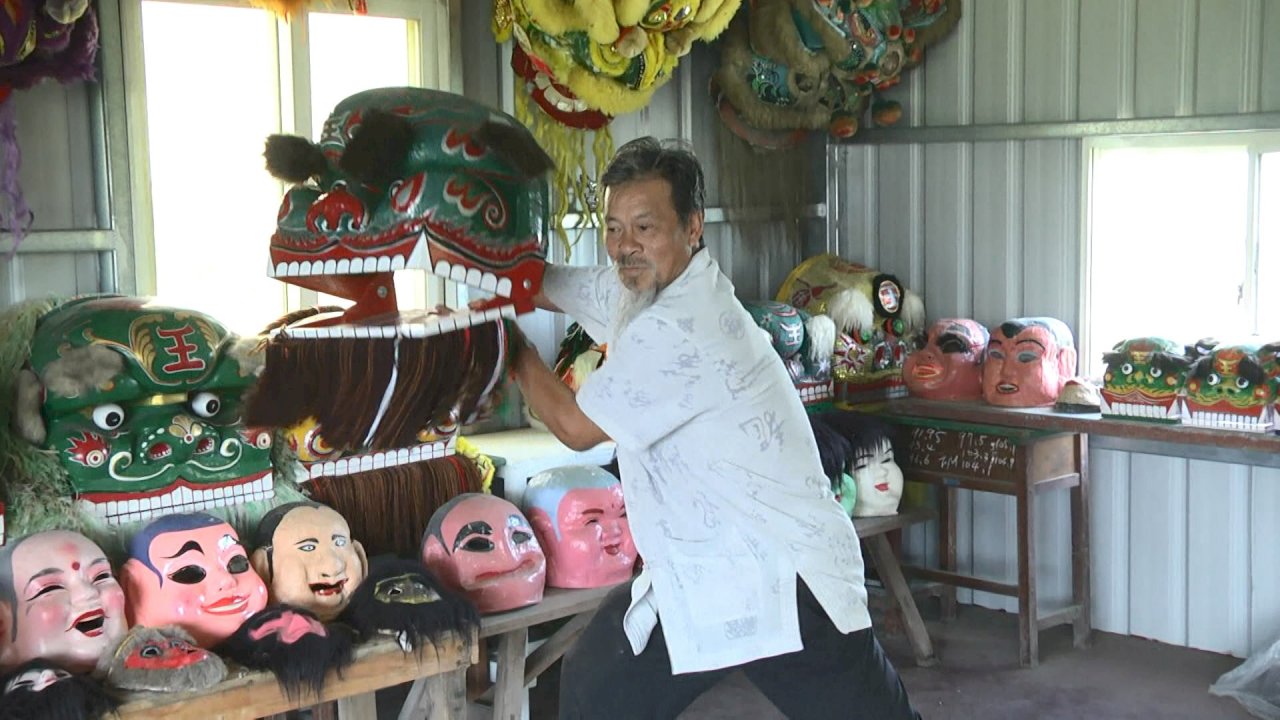
Liu Wen-chen is a dancer in his seventies, but he still has the sprightly step of a much younger man. He is a master of Hakka lion dance, a cousin of the far more famous Cantonese lion dance seen at Chinese New Year celebrations around the world.
There are similarities between the two styles, but don’t confuse them. Taiwan’s Hakka lion dance uses round-headed lions with rectangular jaws. There are overall fewer dramatic leaps in the Hakka style, but keeping the 30kg Hakka-style lions under control requires a much higher level of skill.
The relative difficulty of the Hakka style may be one reason why it is in decline. Liu says it is hard to find performances in the Taoyuan area, where he lives. But no matter. Liu is determined to keep performing himself.
He’s been at his art for 50 years now. After accepting an offer to learn as a teenager, he spent years training in the martial arts that form the physical basis of the steps. He also mastered the skills of making lions from paper, gauze, and glue. His performances in places like Russia, Thailand, and Singapore have won him many awards. But if he can find young people to take over his fading art, it will be the real achievement of his lifetime.