The health ministry says that over 290,000 Taiwanese people now have dementia. That number grows by roughly 10,000 every year. More often than not, people discover that family members have dementia only after the early stages, a short window when they can still seek medical help.
Now, some new technology may be able to help detect the early signs that dementia is setting in.
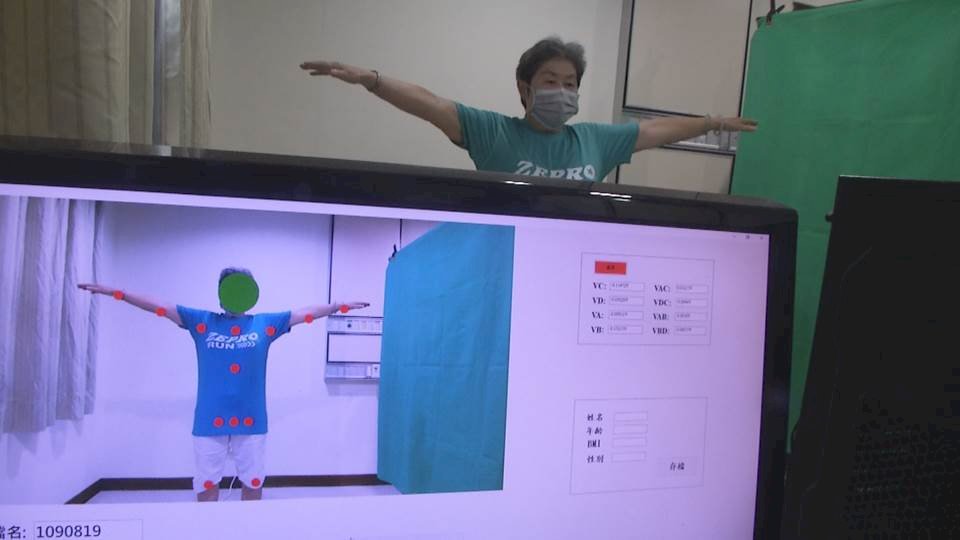
Could doctors soon be able to tell if patients have dementia just by asking them to raise their arms? With the right equipment, perhaps. On a screen, red dots track how good patients’ balance is. If the dots flash, it means that their balance is off—a sign of early-stage dementia.
Doctors can also place photos of a patient’s face on screen and zoom in on tiny signs of imbalance between features that might also hint at early-stage dementia. In addition to looking for physical signs, doctors will also check if patients’ brain waves are slower than the average person’s.
All these tests are all part of a new branch of artificial intelligence developed by Kaohsiung Municipal Da-Tung Hospital and National Sun Yat-sen University. In particular, the project aims to spot dementia caused by Alzheimer’s.
Is someone in your family becoming more forgetful than usual? While it is difficult to detect the early signs, even for doctors, the new A.I. system may soon be able to help your loved ones get the diagnosis they need.