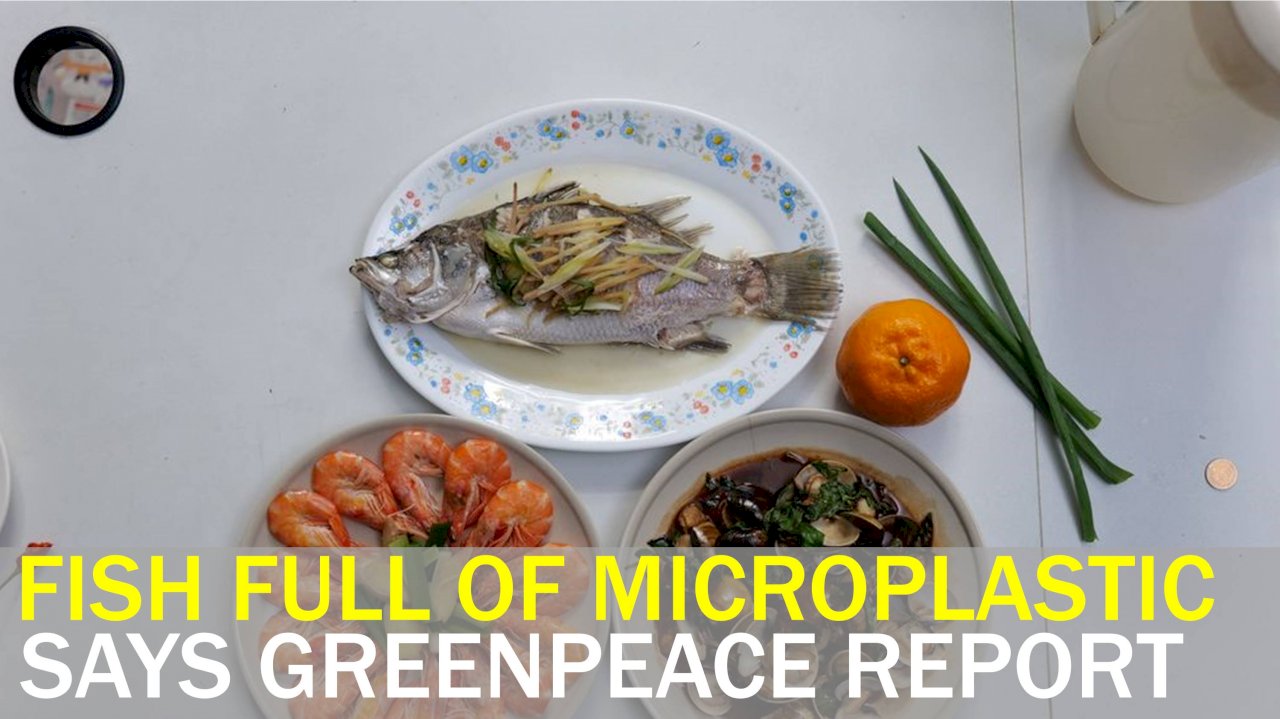
A string of recent research has shown the damage climate change and pollution are causing to Taiwan’s marine environment. Thursday’s new report by Greenpeace shows that sometimes the harmful things we put in the sea come back to bite us.
The Lunar New Year is almost upon us, and it’s time to start thinking about food. For most Taiwanese, seafood is an absolute must-have for New Year’s Eve dinner. But eating microplastic particles? Less of a tradition.
Many Taiwanese are unaware of the plastic pollution contaminating their seafood dishes. A new research project by Greenpeace shows that an average fish-eating Taiwanese consumes about 60 kilograms of seafood a year. That includes shellfish, mollusks and fish.
Project leader T'ang An says that adds up to about 16,000 microplastic particles. She says the amount of plastic Taiwanese people are consuming is shocking. To put it another way, 16,000 particles is equivalent to eating a disposable plastic straw.
The plastic polluting Taiwan’s seafood contains a number of harmful substances.
Microplastics tend to bind to toxic substances, T'ang says. Research shows that those substances can interfere with the body’s endocrine and immune system.
T'ang emphasizes that the fundamental solution is to reduce the amount of plastic in the environment. Taiwan should speed up its waste reduction policy, she says. It should also immediately place strict limits on disposable plastic items and promote reusable food and drink containers. In the end, she says, reducing the prevalence of single-use plastics is the only way to keep microplastics from polluting Taiwan’s waters.