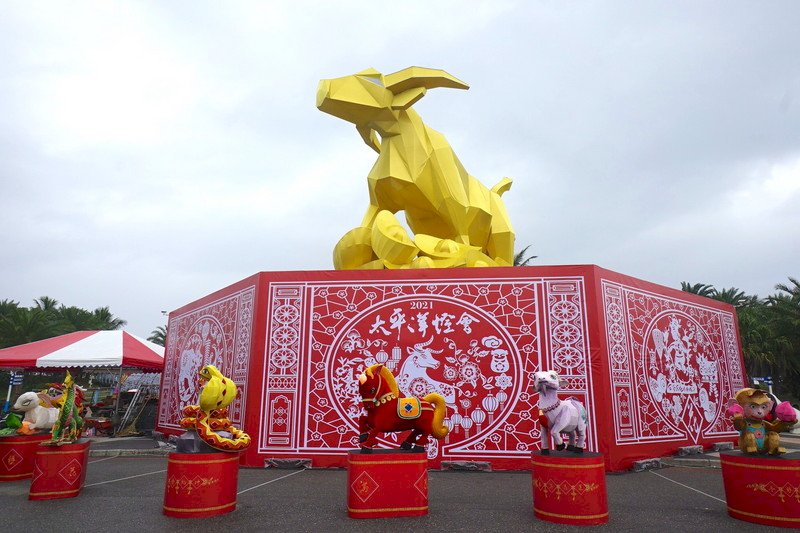
The Year of the Ox is the second year in the twelve-year cycle of the Chinese Zodiac. The Chinese word for ox is 牛 (niú), which is also a family name. Those who were born in the Year of the Ox are thought to be trustworthy, friendly and dedicated.
The ox, generally considered a hard-working animal in Chinese culture, has positive connotations such as perseverance, sincerity and reliability. But there is also a commonly used expression 牛脾氣 (niú pí qì) which literally translates as “an ox’s temper”. The term describes someone who is pretty stubborn and refuses to come around.
Throughout Chinese history, the most famous ox-related story is Laozi (老子) riding an ox. The Daoist philosopher flourished during the sixth century BCE and was a contemporary of Confucius. Laozi’s book Tao Te Ching (道德經), which is commonly translated as the “Classic of Way and Virtue”, has had a profound impact on the Chinese people and Chinese-speaking communities around the world.
But despite Laozi’s historical importance, he remains an obscure figure and there is very little concrete biographical information about him. Seeing that the Zhou dynasty (c. 1046–256 BCE) was on the decline, Laozi left China on a water buffalo heading west, and nobody knows what became of him afterwards.
In the Chinese language, there are many phrases relating to the ox. As the animal is quite large and strong, unsurprisingly, phrases about physical strength come first. For example, we have 力大如牛 (lì dà rú niú), which means “as strong as an ox”. In a similar vein, 九牛二虎 (jiǔ niú èr hǔ), literally “nine oxen and two tigers”, is used to describe a strenuous effort to get something done.
The knife that is used to slaughter oxen is also commonly seen in the Chinese language. For example, 殺雞焉用牛刀 (shā jī yān yòng niú dāo). Literally, it means “why use an ox-knife to kill a chicken?” In English, that might be “why use a sledgehammer to crack a nut?” 牛刀小試 (niú dāo xiǎo shì) is another example. The literal translation is “a quick test of the ox-knife.” But the real meaning is “a modest display of one’s ability and talent”.
Finally, 對牛彈琴 (duì niú tán qín) is an interesting one. Literally, it means “to play the lute to an ox”. But the closest English translation might be “casting pearls before swine” or “preaching to deaf ears”.