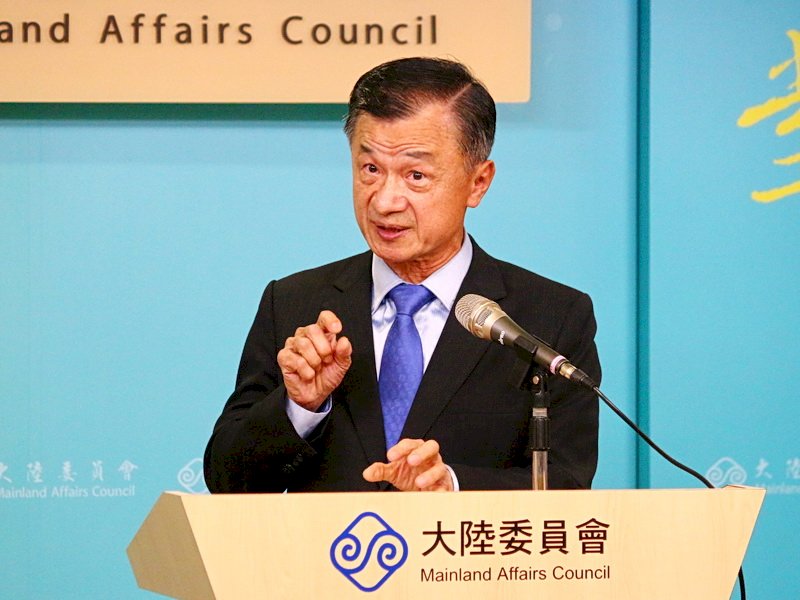
Mainland Affairs Council Minister Chiu Tai-san says Taiwan and China can have meaningful dialogue through the negotiating tactic of “constructive ambiguity”. The term refers to the deliberate use of ambiguous language on sensitive issues in order to move negotiations forward. Chiu made the remarks at a press conference on Thursday. He says that successful negotiations would depend on the attitude of both parties.
But Chiu clarified his comments on Friday by saying that a key policy of China-Taiwan relations in the 1990s is no longer useful for negotiations. The Minister says that the so-called 1992 Consensus has lost its constructive ambiguity.
The Consensus refers to a tacit agreement reached between Beijing and Taipei in 1992, when the KMT was in power. Under the consensus, both sides agree that they belong to “one China”, though each side may have its own interpretation of what “one China” means. For Taiwan, this means the Republic of China, a formal designation that remains Taiwan’s official name.
Chiu says that there is too much internal disagreement over the term to use it in negotiations with China. Taiwan’s Premier has echoed Chiu’s words. He says that Taiwan is ready to engage with any country that approaches talks with a friendly attitude.