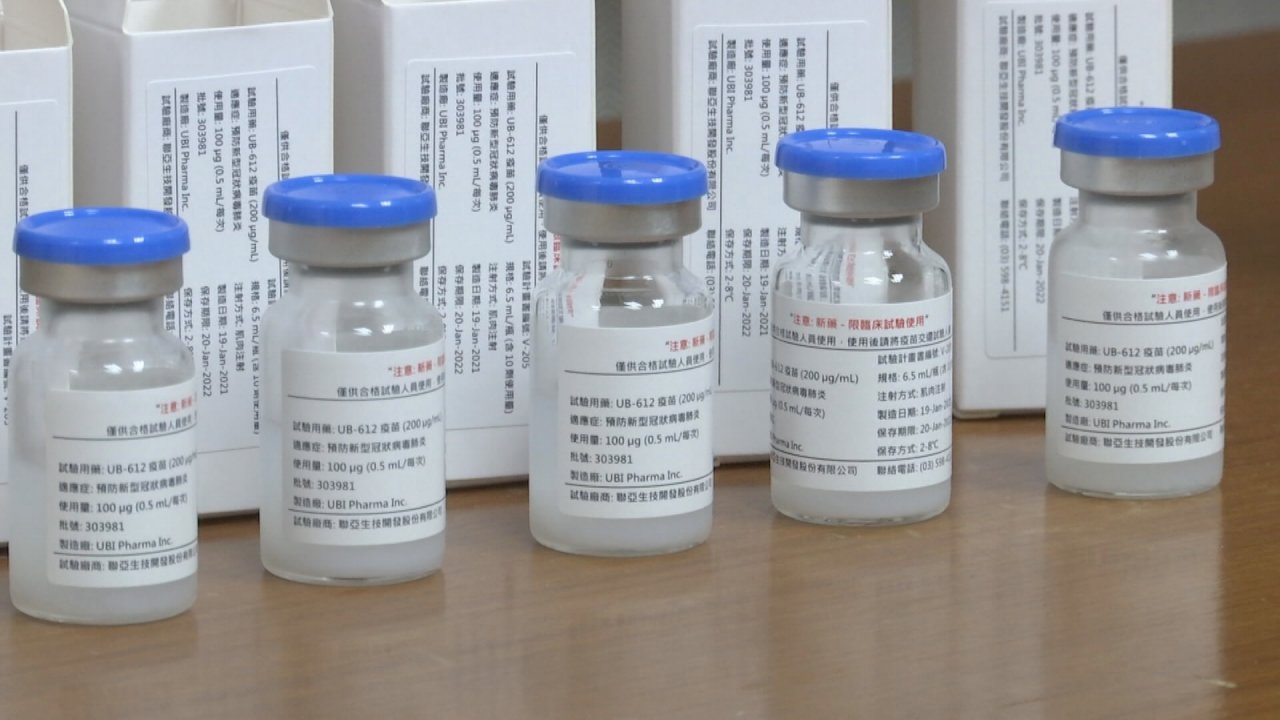
Taiwan has denied emergency use authorization for the country’s second locally-made COVID-19 vaccine. Now, the company behind the vaccine, UBI Asia, says it will file an appeal.
The experts have spoken, and UBI Asia’s COVID-19 vaccine will not get authorization in Taiwan. That news sent the company’s stock price plummeting on Tuesday.
Hwang Kao-pin, who led UBI Asia’s clinical trials, says that the review board should not have relied on neutralizing antibody levels to assess the vaccine. Hwang says the reaction of T cells should have been considered as well, but it was left out of the equation. T cells are a kind of white blood cells that play an important role in the body’s immune response to infection.
UBI Asia released a three-point statement on Monday evening. Firstly, the company says that its vaccine retains the same neutralizing antibody standard against the Delta variant as the original virus causing COVID-19. Secondly, it says that Taiwan’s Food and Drug Administration has failed to take into account that the dominant form of virus worldwide is the Delta variant, not the virus as it first appeared in Wuhan. And thirdly, UBI says that T-cell immunity, long term immunity, and the immune response to new variants should all be considered during authorization.
However, experts are not optimistic about UBI Asia’s chances of a successful appeal.
Former health minister Yaung Chih-liang says that UBI Asia and Medigen, another local vaccine manufacturer, should make their data public. Yaung says since both companies got funding from the government, they should be transparent with their results so that they can learn from each other.
UBI Asia’s hopes of getting an EUA now depend on raising its vaccine’s neutralizing antibody level while conducting Phase III clinical trials in India.