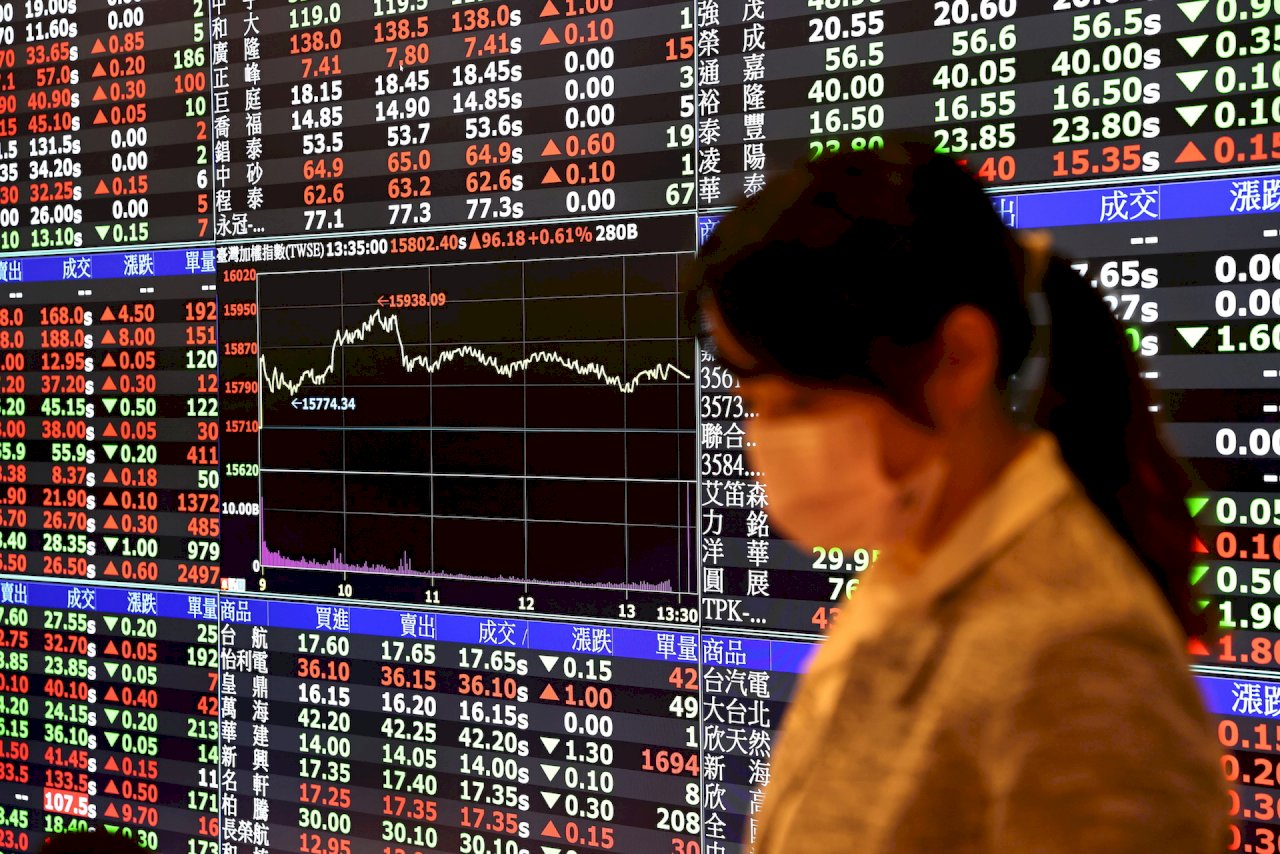
Taiwan’s Financial Supervisory Commission says it is running simulations to determine how a conflict with China might affect financial markets. That’s according to the commission’s chairperson, Huang Tien-mu, who spoke at the legislature on Monday.
Huang’s comments come at a period of high tensions in the Taiwan Strait. Defense Minister Chiu Kuo-cheng recently said that in his 40 years of service, he had not seen the situation be as serious as it currently is.
At the legislature on Monday, lawmakers raised concerns over the financial effect of previous instances of cross-Strait tension. During the 1996 Taiwan Strait crisis, as well as the 2008 financial crisis, foreign capital quickly flowed abroad. Large portions of assets deposited in private banks were transferred to publicly-owned institutions, creating a liquidity risk for the banks.
Lawmakers are suggesting that increased deposit insurance limits may improve public trust in the banking system.
Central Deposit Insurance Corporation director Chu Hau-min says that deposit insurance limits in Taiwan are currently set at NT$3 million (US$110,000). He says this is the third highest limit in the world, following the United States' US$200,000 and Eurozone’s €100,000 (US$120,000).
However, Financial Supervisory Commission head Huang Tian-mu says that increasing deposit insurance limits is not something any single government office can decide by itself. He also says that foreign capital flowing in and out is a natural process, and that he has confidence in Taiwan’s stock market.