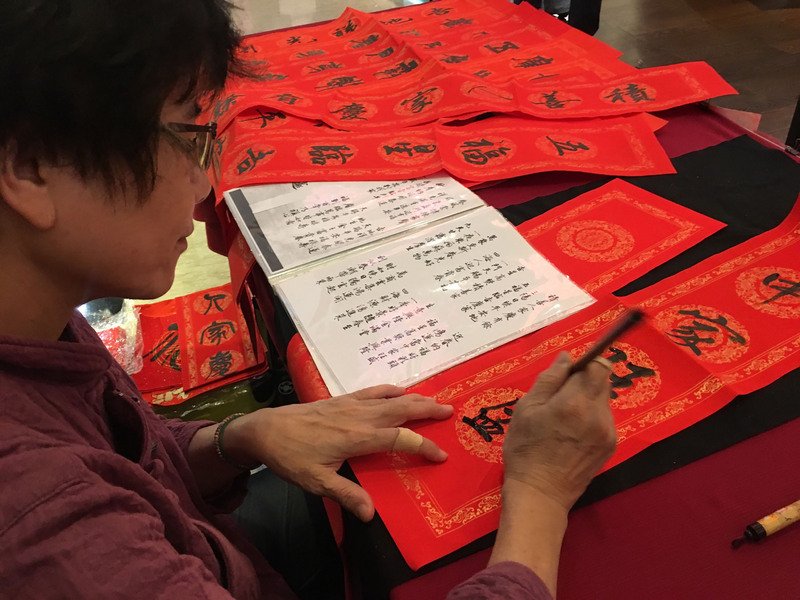
Lunar New Year, also known as Spring Festival or the Chinese New Year, is just around the corner. It’s Taiwan’s biggest holiday of the year, and people are looking forward to a long week of celebrations to welcome in the Year of the Tiger. Lunar New Year is full of exciting activities and events for families to take part in together, with each day of the calendar having its own role and special customs to bring in the new year. However not all of these traditions are the most environmentally conscious, and so in recent years Taiwanese people have been looking for more eco-friendly ways to celebrate.
One Lunar New Year tradition that usually happens around a week before the first day of the new year itself is the big cleanout. Here Taiwanese people like to do a thorough cleaning of their house to ‘sweep away’ the old year and any bad luck associated with it, and to make room for the new year and a new start, just like a detox but for your home. This also often includes getting rid of old clothes to make way for buying a new wardrobe for the new year and parents will often get their kids new clothes as a gift. Attitudes are slowly shifting away from the wasteful concept of getting rid of clothes every year but for many this is a tradition that’s particularly hard to shake.
One favourite Lunar New Year item, especially for kids, is the red envelopes that adults give out to their relatives filled with money. On the outside of the envelopes are blessings and well wishes for the new year, and so the envelopes are meant to bring luck as well as prosperity. One eco-friendly idea that some Taiwanese people have started adopting is to reuse red envelopes between years. As long as the envelopes don’t have any reference to this year’s zodiac animal, then keeping any envelopes you get and re-using them in future years is an easy way to cut down on paper waste and still maintain the spirit of red envelope exchanging.
A traditional meal to be found at a Lunar New Year banquet is shark fin soup. This dish dates back more than 1,000 years and used to be a delicacy indicating your wealth and social standing. The broth is glutinous and the fibers from the shark fin have no real taste but it’s still a dish associated with the New Year celebrations. In order to meet the demand for shark fin soup around Lunar New Year, a traditional practice for fishers is shark finning. This is when a shark’s fin is cut off while the shark is still alive, and the shark is then released back into the water to die. Because sharks are top predators in ocean ecosystems, their mass hunting can seriously disrupt these ecosystems. In 2013, the Taiwanese government banned this particularly cruel practice. However, shark fishing is still legal, just as long as the fishers bring both the body and fins of the sharks back together. That said, many Taiwanese people have long since turned their backs on shark fin soup and don’t eat it any more during the Lunar New Year.
Finally, at the end of the Lunar New Year on the 15th day of the first month is the Lantern Festival. After one full moon cycle, people like to write their wishes for the new year onto lanterns and release them into the sky, watching them float away. One of Taiwan’s most famous lantern festivals takes place in the Pingxi District of New Taipei City. In Pingxi alone, around 300,000 lanterns are released every year, trashing the surrounding mountains. Their wire frames take ages to break down, the residual dyes and heavy metals damage mountain animals, and lots of plastic waste is generated from the lanterns. Many volunteers come to Pingxi after the festival to help with the cleanup, but it’s still a big environmental issue. Interestingly, the solution to the problem could be to go back to more traditional methods of lantern production. Originally the lanterns were constructed out of bamboo, cotton and paper, and whilst this is more expensive nowadays, this would help reduce the amount of wire and plastic waste that is generated by sky lanterns.
Lunar New Year is a great cause for celebration with family and friends, however it’s not the best time of year for the environment. But that doesn’t mean it has to be this way, and the New Year holiday can still be celebrated without generating huge amounts of waste and damaging the environment. Slowly but surely, people are becoming more conscious of the impact of different New Year’s traditions, and hopefully in the future Taiwan will start to see more emphasis being given to the environment as people bring in the New Year together.