Last week, the Taiwanese government announced that it plans to cut tariffs on a wide range of products coming into Taiwan between February 7th and April 30th. The products affected include corn, soybeans and wheat. The government has also told the Council of Agriculture to provide subsidies to egg farmers because of recent egg supply fluctuations.
These moves are meant to help farmers as they rely on corn and soybeans to feed their animals, as well as businesses who make baked goods and noodles. This of course will have a knock-on impact on consumers, hopefully going some way to stabilize prices in light of recent increases in the cost of groceries both in Taiwan and around the world. The price of corn has doubled since April 2020, wheat has gone up by 45% and soybeans have increased by 80%. Globally, this has been put down to many causes including supply chain issues caused by the pandemic. There is however one cause in particular that will persist long after the pandemic has stopped affecting supply chains - Climate Change.
The agricultural industry is dependent on the natural environment for efficient yields. Even small changes in yearly temperatures or conditions can affect the production of foodstuffs that are needed to feed Taiwan. A member of Taiwan’s Council of Agriculture Chuang Lao-ta (莊老達) in November last year spoke of how Taiwan’s farmers have already been affected by Climate Change, with some being forced to grow guavas where they used to grow persimmons and some being forced to move their crops to higher altitudes to chase the weather conditions the crops need to grow. The most striking example of how farmers in Taiwan have been impacted by Climate Change is the recent droughts. In the summers of 2020 and 2021, the Water Resources Agency decided to divert water away from farmers to semiconductor chip makers. In 2021, this decision shut off irrigation to over 180,000 acres of farmland. This was estimated to have cost farmers a collective NT$400 million (just over US$14 million) in losses, impacting a whole range of crops.
Farming is therefore an area that is feeling the effects of Climate Change. On the flip side however, agriculture also has a relatively large impact on the climate. At every stage in the food production process, there are steps that are taken that all contribute to climate change to some degree. This is true for the production, storage, processing, packaging, transportation, preparation and serving of everything that we eat. In particular however, farming is known to produce large amounts of greenhouse gases, especially methane and nitrous oxide. Methane is produced when livestock digest their food and nitrous oxide is produced from some types of fertilizer.
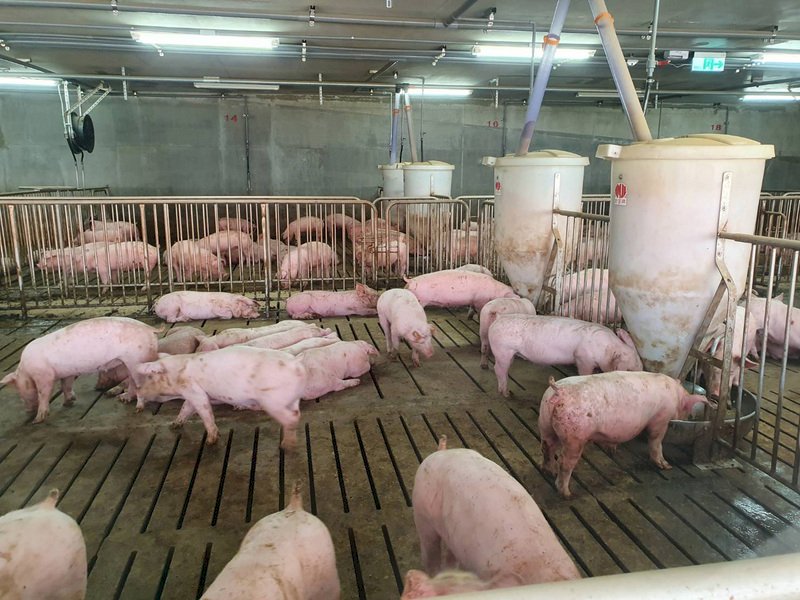
The Council of Agriculture plans to invest NT$10 million annually, or just over US$350,000, to combat Climate Change. It hopes to be able to develop zero-emission models for farming that it can then encourage farmers to follow. Some possible measures include labeling certain agricultural products with information about their climate footprint to keep consumers in the know and encourage farmers to reduce this footprint. Waste reduction in the farming process is also a key goal, as well as the use of electric vehicles. One possible measure that’s already in place in Taiwan is the use of biogas. This is when pig farmers capture the waste from pigs and burn it to produce electricity. According to the Council of Agriculture, waste from 2.5 million pigs was used in this way in 2020, turning potentially harmful emissions into useful emissions.
In this way, the relationship between agriculture and Climate Change in Taiwan is complicated. At times the government is willing to help the industry out when it’s affected by Climate Change, as seen in the recent tariff cuts on imported crops. At times, they’re willing to leave the industry both metaphorically and literally dry, as seen when they diverted water away from farming during the recent droughts. Both of these are underpinned though by a recognition of the impact that farming has on the climate and a need to reduce this impact. If the industry can’t do this then it could find itself stuck in a vicious cycle, a victim of its own impacts.