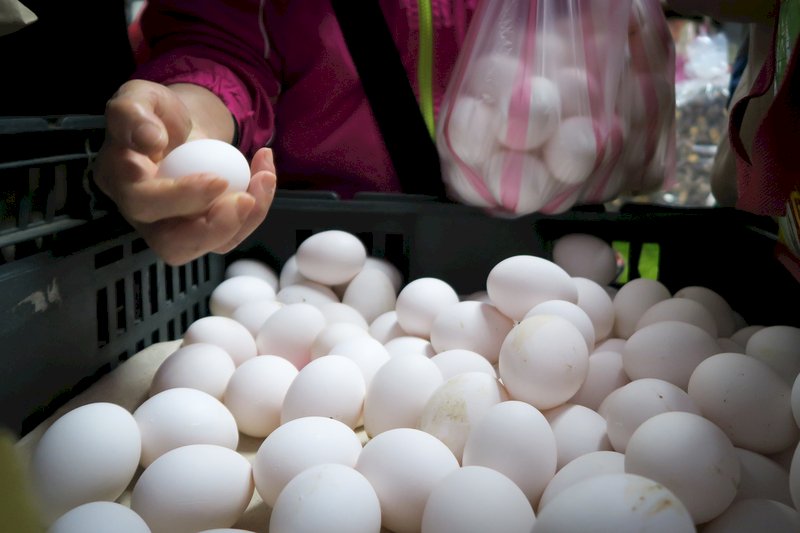
Taiwan’s Council of Agriculture says it has launched several new initiatives to tackle the recent egg shortage, but the situation still might not stabilize until March. Agriculture Council official Chiang Wen-chuan said on Monday that the council is willing to increase egg production subsidies and investments to help out farmers.
Taiwan has suffered a shortage of eggs since the end of January, and some stores have restrictions in place to prevent panic buying. Industry experts say the shortage is the result of a past slump in demand, cold weather, and avian flu outbreaks.
Last week, the council raised its subsidy on egg production from NT$2 per Taiwan catty (about 0.6 kg) to NT$36.5 and is also offering NT$3 per Taiwan catty of purchased chicken feed.
Chiang says that for farmers, the average production cost of eggs per catty is NT$25 to NT$28, although the cost may be higher for farmers with a low egg yield. Therefore, he says offering NT$36.5 per catty as a subsidy should be able to help increase egg production.
The agriculture council is also offering subsidies to farmers who buy more young chickens, which are able to start laying eggs about four months after they’re born.
Besides subsidizing domestic production, Taiwan has also ordered more eggs from Australia, the US and Japan, which are due to arrive in late February. That’s why the agriculture council says it might be late March before egg supply in Taiwan returns to normal.