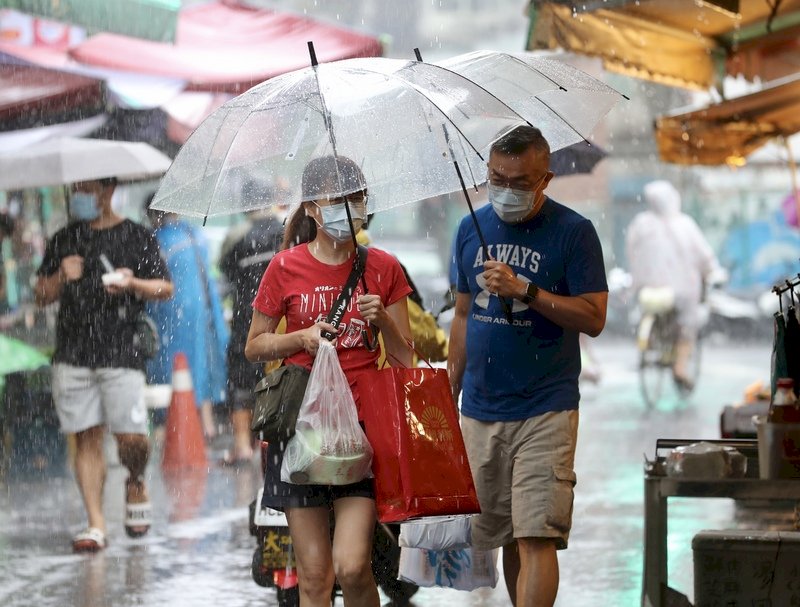
For the past few weeks, Taiwan has been experiencing a period of quite intense rainfall. As of Tuesday morning, 195.5mm of rain has been recorded in February and is close to exceeding the 198mm recorded in February of 2014. After particularly dry summers for the past two years, some are welcoming this wet period, while many are waiting for sunnier days to return. However, Taiwan’s rain is more than just a minor inconvenience - it’s actually acidic.
Most of Taiwan experiences acid rain at different points throughout the year. Taiwan’s worst acid rain was found to be in the Zhongli District in Taoyuan according to 2019 research from the National Central University. They collected rainwater samples from 14 weather stations and found that the average pH value for the rain in Zhongli was 4.66, which is a similar acidity to tomato juice. Any pH value below 5.0 is considered to be acidic. In general, the rain in northern Taiwan is more acidic than that in the center, south and east.
Acid rain forms when harmful chemicals such as Sulfur Dioxide and Nitrogen Oxides are emitted into the atmosphere. The chemical reactions that happen when they meet water, oxygen and other chemicals in the air form sulfuric and nitric acids. These then mix with rainwater and fall to the ground as acid rain. These harmful chemicals that form acid rain can come from some natural sources such as rotting plants and volcanic eruptions. However, the vast majority of these chemicals in the atmosphere are products of manmade reactions. Burning fossil fuels not only releases greenhouse gasses such as carbon dioxide, but also releases these pollutants that form acid rain. The biggest sources of these pollutants are coal power plants, factories and vehicles.
About half of Taiwan’s acid rain is actually caused by pollution that comes from outside of Taiwan. In autumn and winter, weather fronts blow in from northern China, pick up industrial emissions from across China and then come down to Taiwan. However many of the pollutants that cause acid rain also come from the heavy industry, power plants and domestic appliances found in Taiwan. Motor vehicles in particular are a cause for concern in Taiwan. Taiwan has the highest density of motorcycles in total, with around 14 million motorcycles for a population of 26 million. Yet it’s estimated that only around 100,000 of these are electric. On top of that, in 2020 there were over 450,000 new car sales in Taiwan, the highest sales volume since 2006.
Acid rain can have a wide range of effects on the environment. Besides eroding man-made things like buildings or statues, it can also affect the natural world. Acid rain is known to wash the protective film off of leaves which then stunts the growth of trees. It can also affect the composition of soil, which makes it uninhabitable for plants and animals. When acid rain enters a body of water, it can raise the acidity of the entire water source and cause fish and other animals to die off. A lake with a pH below 4 is considered to be a dead lake.
If that’s not enough reason to be concerned, acid rain also irritates skin and can increase the severity of itchy allergic reactions and inflammation. If severe enough, it can even lead to hair loss. In total, it’s estimated that the yearly damage from acid rain on Taiwan’s ecology, agriculture, architecture and human health costs around NT$10 billion.
The acid rain situation is slowly improving as people realize the dangers and severity of the problem in Taiwan. The Environmental Protection Agency introduced air pollution prevention fees on different sources of pollution such as factories and cars in 1995. It later lowered the limit on the sulfur content of diesel fuel and gasoline in 2011 and 2012 respectively. Yet the problem still remains, and will most likely not improve significantly without a great deal of international cooperation. China’s heavy industry continues to pollute the atmosphere at alarming rates and the effects of this continue to be felt in Taiwan. For the time being, it’s probably best to just remember an umbrella in the rain.