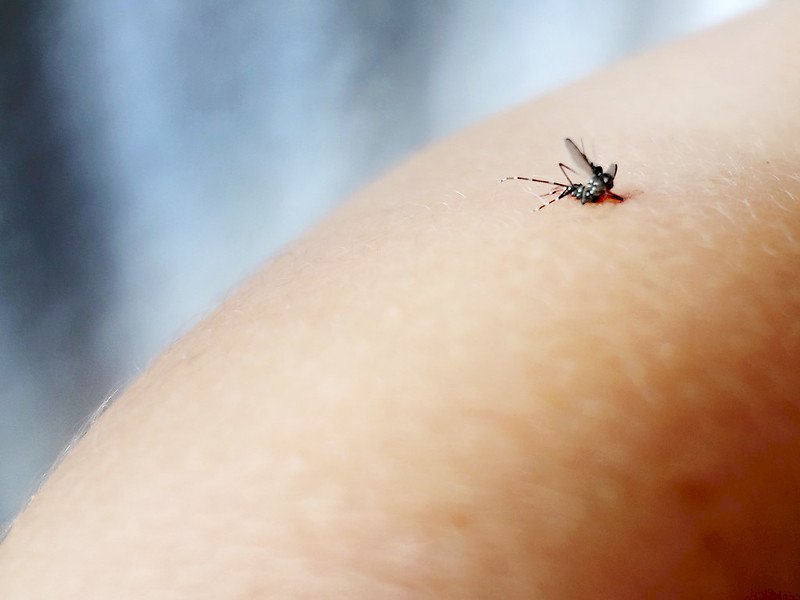
Climate change is having lots of different effects worldwide and in Taiwan. Rising sea levels, increasing temperatures and more extreme weather events are all things that are often mentioned when discussing climate change. One area that is often overlooked is the relationship between climate change and disease. Many different illnesses are heavily linked with the climate of the areas that they’re found in. A clear example of this is dengue fever which is found in Taiwan.
Dengue fever is an illness that is caused by mosquito bites. Symptoms tend to start around three to fourteen days after being bitten by a mosquito carrying dengue. These symptoms are usually not fatal, and include things like headaches, fevers and vomiting but in some cases can lead to problems such as low blood pressure. People can get dengue fever up to 4 times in their lives and globally around 400 million people are infected every single year.
In Taiwan, dengue fever is usually a disease found in the south in cities such as Kaohsiung and Tainan. Every year there are outbreaks of different size and severity. The 2015 outbreak was particularly severe, with more than 43,000 cases and 228 deaths from the disease. The disease can be found year round but is most common in the rainy season that runs from June to December as this is when the conditions are best for the mosquitoes.
Dengue fever is very much linked to the climate and therefore climate change. Mosquitoes are cold-blooded animals and are therefore limited by temperature. This means that dengue fever is typically only found in tropical and subtropical areas with a warm climate. The Tropic of Cancer runs across the center of Taiwan meaning that it’s subtropical in the north and tropical in the south. Taiwan’s summer temperatures range between 25 and 33 degrees celsius and there is high humidity all year round. These high temperatures and humidity mean that mosquitoes have the perfect conditions to breed and spread, taking dengue fever with them.
Taiwan is already a place with weather conditions that encourage dengue fever but this is only increasing due to climate change. As Taiwan’s temperatures rise, there’s more opportunity for these mosquitoes to flourish and survive, meaning there’s more opportunity for them to infect people. In the past 110 years, Taiwan’s average annual temperature has increased by 1.6 degrees and this has been accelerated in the past few decades. The length of Taiwan’s summer season has been increasing and the summers have been becoming more intense. This creates ideal conditions for these dengue-carrying mosquitoes and is therefore a risk.
This isn’t just something that is a future issue, but actually has shown itself to be the case already. A 2009 study on dengue fever in Taiwan showed that when the temperature in Pingtung county increased by 1% relative to its average temperature, the number of patients with dengue fever increased by over 11%. The study showed a similar relationship in Kaohsiung, where a 1% temperature increase saw a 5% increase in dengue patients. Lots of factors can play into the spread of dengue fever, including population density, rainwater levels and poor control of standing water. It’s clear however that increasing temperatures is a crucial factor and one which has devastating potential.
Currently, there is one vaccine available for dengue fever, called Dengvaxia. It’s recommended for people who have been previously infected with dengue fever but not for those who haven’t. If given to someone who hasn’t been infected, it may increase the risk of severe dengue fever if they do go on to be infected. Several other vaccines are in development that may prove more universally successful but dengue fever is probably here to stay in the long run. Its spread in Taiwan is a reminder both here and around the world of how widespread the effects of climate change can and will be. Small variations in average temperatures can have huge impacts on a whole range of different areas. Disease transmission is no exception to this and thus is yet another reason to try and prevent the most extreme climate change predictions from becoming a reality.