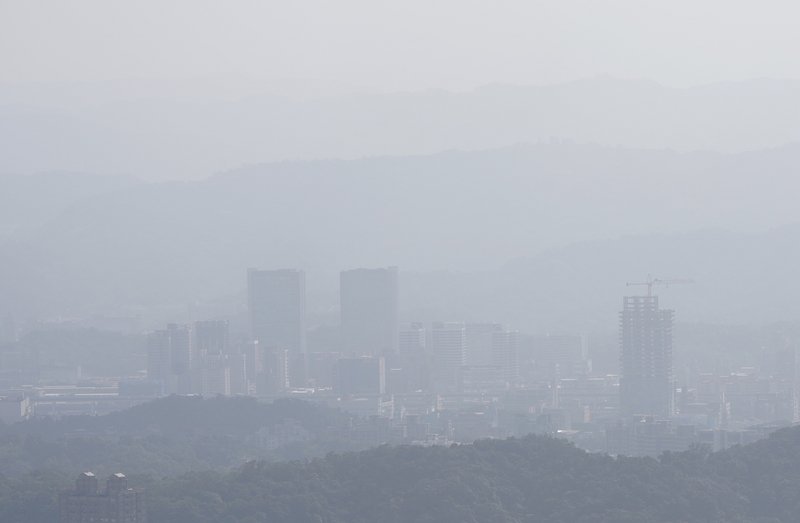
On Monday, a fire broke out at a Carrefour logistical centre in Taoyuan. Carrefour was the first international retailer to enter Taiwan in 1989 and is now one of Taiwan’s largest chains. The fire didn’t injure anyone, but Taoyuan’s department for environmental protection has said that because of the pollution caused they will fine Carrefour between NT$100,000 to $5 million, or between US$3,500 to US$175,000. As a result of the fire, the agency had to issue a local air quality warning to protect those people in the area who are particularly sensitive to air pollution, such as people with breathing problems. The pollution was even so severe that an emergency text message was sent out advising anyone who lived within 20km of the fire to stay indoors.
Air quality is a topic that has gained more and more attention over the years both in Taiwan and around the world. One of the pollutants that is talked about the most in discussions around air quality is PM2.5. These fine particles are created by things such as combustion engines in vehicles, lighting firecrackers or burning fuels in factories. The United Nations lists PM2.5 as a carcinogen thanks to its ability to enter our respiratory system and cause lung cancer, as well as other diseases related to the lungs and heart. The World Health Organisation’s suggested limit for PM2.5 is 10 micrograms per cubic meter. However, research from the National Taiwan University revealed that the average concentration in the Taipei area is 20 micrograms per cubic meter, highlighting the unhealthy levels of air pollution in Taiwan. According to estimates from IQAir, air pollution caused 320 deaths in 2021 and cost around NT$10 billion or US$380 million.
Taiwan’s air pollution issues are caused by many different factors, not all of them completely man made. For example, Taiwan’s mountains affect air quality. Taipei is surrounded by mountains and so has a tendency of trapping pollutants, making the issue more severe than it would otherwise be. Of course though, Taiwan’s heavy industry plays a huge role in air pollution issues. In Taichung for example, there are 11 different industrial parks and the city is surrounded by mountains on three sides. In the winter time where there is little wind this leads to high levels of pollution. Taichung winters also see lots of sunshine and the pollutants react with the sunlight to form new, dangerous compounds. Kaohsiung also sees similar issues due to its industrial role. In 2017, demonstrations took place in Kaohsiung and Taichung with protestors marching under the slogan “One Taiwan, Two Skies”. The point they were highlighting was that the air quality in these two cities is much worse than in the air quality in and around Taipei, a fact that they believe is unfair and dangerous.
Recently, Taiwan’s Environmental Protection Administration has been putting new measures in place to try and control air pollution. For example, a few weeks ago they brought out new guidelines for local governments. These guidelines state that when the air quality is poor, local governments have to activate air pollution command centers to improve the air quality quickly. In the past two years these command centers have been activated around 180 times but now the agency hopes they’ll be used even more. The command centers have the power to put different measures in place, such as banning high-pollution vehicles in certain areas or offering incentives to those who use public transport.
There are signs that these kinds of measures are working. Kaohsiung has seen an decrease in the number of alerts issued for unhealthy air quality year on year. Of course, there will always be things that unfortunately contribute to air pollution, such as the fire in the Carrefour logistics center earlier this week. If however the government and its environmental protection agencies can continue to decrease the routine levels of air pollution then this will be a huge step towards combating climate change. Air pollution is one of the most noticable effects of climate change. Many older people in places such as Taichung complain about the decrease in air quality as the city became industrialized. If noticeable improvements can be made to air quality then hopefully people will pay attention. Maybe then more people will realize the concrete effect we can have on the climate in both positive and negative ways, thus laying the road for further efforts to fight climate change.