How many hours a day does the average child spend staring at a screen? With Children's Day in Taiwan fast approaching, researchers are coming forward with new data about child development in the age of smart technology.
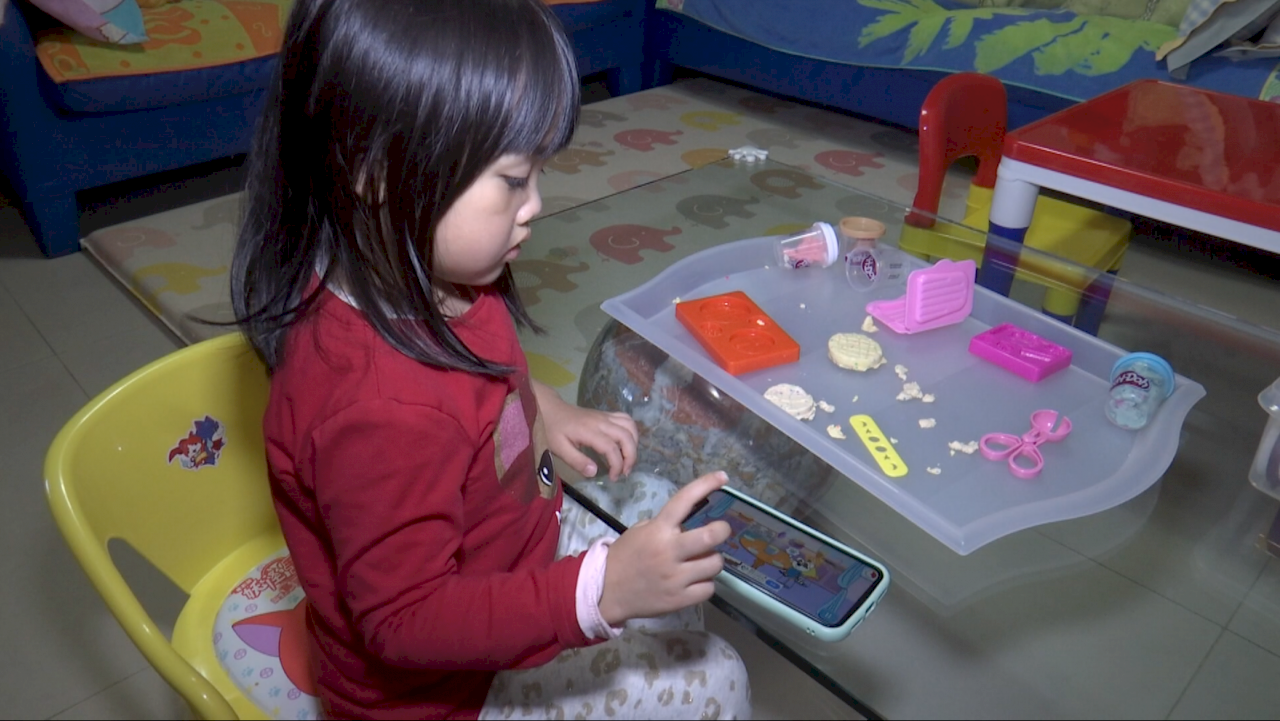
A young girl sits with her eyes glued to the television as she watches a popular cartoon. As smartphones, tablets, and computers become commonplace items in most Taiwanese households, children are spending an increasing amount of time staring at digital displays.
New research reveals that most 3 year-olds spend more than two hours a day watching TV or playing on smart devices. For children from lower economic backgrounds, that number jumps to over three hours a day.
The World Health Organization recommends only one hour of screen time a day for young children. This discrepancy in screen time between children of different socioeconomic backgrounds could lead to a larger gap in their academic achievements.
National Taiwan University professor Chang Chin-ju says that spending too much time staring at these electronic devices can have a negative effect on child development. Children might struggle with language acquisition, grow more slowly or have difficulties developing emotional intelligence.
Chang says kindergarteners are at a very impressionable age, and that any delay in their cognitive development can have long-term effects. If parents are too busy to play with their children during the week, Chang says they should try to make up for it over the weekend.
This can be through simple activities like reading, chatting, or just eating together, all of which help children to develop.
Experts also encourage parents to put down their phones for an extra ten minutes per day to read with their children. Research shows that following this routine for 21 consecutive days can make reading together a long-lasting, healthy habit.
Developing new habits can be difficult. But with baby steps, Chang says parents can make positive changes in their children's lives.