Transportation is a big issue when it comes to climate change. We all have to get around somehow, whether that’s by plane, train, bus, bike or car. Not all modes of transport are created equally however, and around the world, transportation makes up between 15-20 percent of greenhouse gas emissions. Traditionally, Taiwan is a place that loves its motorbikes. Right now there are more than 1 motorbike for every two people, and the vast majority run on petrol or diesel which isn’t the best for the planet.
Taiwan’s going to need a green travel revolution if it wants to bring its carbon emissions down and achieve its goal of reaching net zero by 2050. So what’s the future of travel in Taiwan? Some of the solutions might already be here. Taiwan has a great bike sharing service called Youbike. These yellow or orange bikes are found in cities all around Taiwan and can be rented for both short and long rides with the Youbike app or a travel card. Unlike other bike renting schemes around the world, you can’t simply park or pick up a bike from wherever you want and have to use special docks, but there are enough of them around to make finding a Youbike an easy task. They’re super convenient, super cheap, and of course environmentally friendly. According to data from the company, one YouBike serves an average of 12 people per day.
Building on this success, in 2015 a company called Gogoro launched a range of electric scooters in 2015. These electric mopeds can be bought for a reasonable price, or you can rent them in a scheme that’s similar to the Youbike scheme. People in cities such as Taipei can rent the blue electric scooters from points around the city and swap out the battery packs whenever the battery gets low, combining the eco-friendliness of Youbikes with the convenience of riding a motorbike in Taiwan. It’s estimated that across Taiwan’s gogoro network, there are over 250,000 battery swaps per day. When travelling at about 40km/h, they have a range of about 95km, meaning travelling both short and medium distances is a breeze.
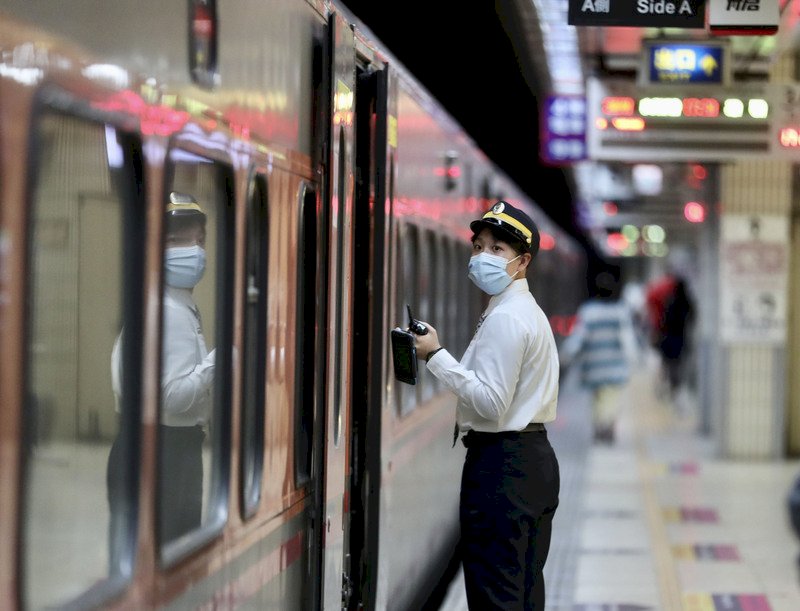
Taiwan also boasts a strong network of both traditional and high speed rail trains that run throughout the island’s cities and towns, making public transport a great way to get around the island. Over 1 billion passengers took a train in Taiwan in 2016. This averages to just under 3 million passengers per day, an impressive number for Taiwan’s population of around 23 and a half million people.
Taipei’s metro, known as the Mass Rapid Transport, is also an eco-friendly way to get around the city and is very popular with around 2 million trips made daily. Taiwan even has a scheme to reward you for taking green transport like the metro. If you link your travel card to Taiwan’s ‘green dot’ app, you can even earn points every time you take the metro or rent a Youbike which can then be redeemed at stores all around Taiwan.
But there are of course still lots of times when you can’t take the subway and you have to rely on buses. Lots of Taiwanese buses still run on petrol, but Taiwan has a plan to upgrade all of its buses to electric buses by 2030. The southern city of Chiayi has already met this goal and other cities are following in its footsteps. Taipei started introducing electric buses into its fleet in 2018, and aims to expand it to 400 electric buses by the end of the year.
There are so many different ways to travel in an eco-friendly way. Whether it’s renting an electric scooter, a public bike, a green bus, the metro or even just walking, Taiwan has a lot of different options for green travel. The more everyone takes eco-friendly methods of transport instead of just driving, the 15% figure on global climate emissions will be reduced. Taiwan’s high population density means that ultimately switching everyone over to greener methods of transport will require high amounts of investment and development of new infrastructures, but Taiwan definitely has the existing foundations to make those changes and so the future of green transport is bright in Taiwan.