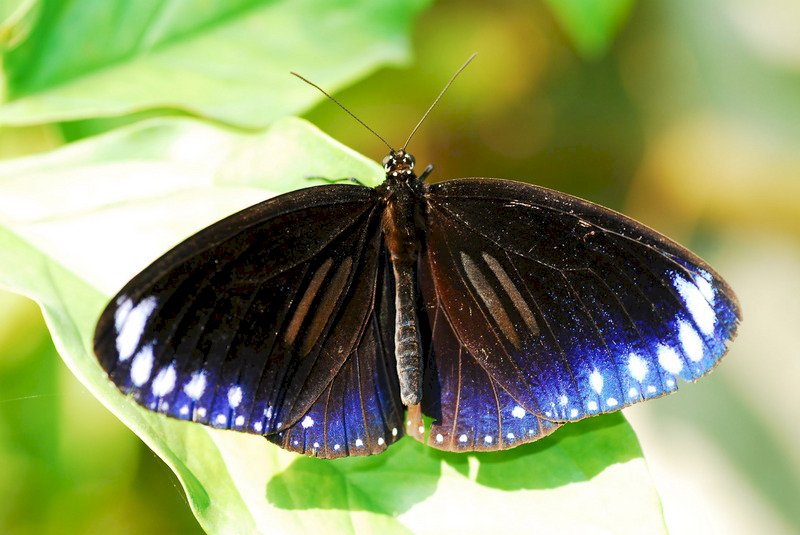
Taiwan has an extreme wealth of biodiversity. Thanks to its climate that ranges from subtropical to tropical, and its mountains, beaches and forests, Taiwan’s ecosystemes can support many different species. This includes many that are unique to Taiwan. Butterflies in particular have a special tie to Taiwan, as they helped build Taiwan from the ground up but now face an uncertain future.
I recently read ‘The Stolen Bicycle’ by Wu Ming-Li. The book tells the story of one man trying to find his dad’s bicycle that was stolen decades ago in Taipei. Along the way he meets many different people who later owned the bike, including a girl who grew up catching butterflies with her father and selling them to factories. Then when she was older, she started working in the factories to cut off the butterflies’ wings and glue them onto paper to make expensive butterfly collages. I was intrigued to learn that Taiwan once had a sprawling butterfly industry that provided huge numbers of families with their income.
There are 12 butterfly families found worldwide and 11 of them are found in Taiwan. In addition, 50 species of butterflies are endemic, meaning they’re only found in Taiwan. These species of butterflies played a significant role in Taiwan’s economic development. In the 19th century, the areas around Puli in Nantou County attracted butterfly researchers from around the world to come and gather species. The conditions there meant that there was a high concentration of unique butterflies. Puli was also where Japanese businessman Kiyomatsu Asakura founded Taiwan’s first butterfly processing plant in 1918 to produce artwork made from the butterflies’ wings. By the 1960s, Taiwan sold around 30 million US dollars of butterflies per year and was the world’s largest exporter. This went on to peak around 1975 before declining and becoming a thing of the past.
Taiwan’s butterfly market helped spur Taiwan’s economic and industrial development but this very development led to the market’s downfall. The industrial development of Taiwan significantly changed the landscape of the island as cities and towns were developed. Huge areas of forest had to be cleared for roads, homes, factories and the use of pesticides had to increase to support growing populations. This damaged butterfly habitats and resources, meaning the processing of butterflies took a hit and decreased from the late 1970s onwards.
Unfortunately as a result of the overprocessing and the destruction of their habitats, Taiwan’s butterfly numbers aren’t what they used to be. There are currently five protected butterfly species in Taiwan. These include some that can only be found on Orchid island such as the ‘Magellan’s Iridescent Birdwing’ and endangered species such as the ‘Broad-tailed Swallowtail’. These species are at risk of facing a similar fate to many others that were once found in Taiwan - extinction. Luckily, measures have been put in place to help their continued survival.
Despite this decrease, Taiwan still has one of the world’s highest concentrations of butterfly species. Taiwan’s geographical location provides the perfect conditions for many different butterfly species and the island has sometimes been called ‘the kingdom of butterflies’ as a result. This year the Forestry Bureau finished a six book, five volume encyclopaedia on Taiwanese butterflies. The encyclopaedia is a collaboration between the bureau and Hsu Yu-Feng, a butterfly export from National Taiwan Normal University and features beautiful colour photos of 420 species with descriptions in Chinese and English.
There are still many places in Taiwan where you can appreciate the beauty of Taiwan’s butterfly species. The Meinong district in the south of Taiwan just outside of Kaohsiung is home to a place called the Yellow Butterfly Valley. In summer there are over 100 species of butterfly that flock to the area but the one that stands out the most is the mid sized yellow emigrant butterfly which gives a beautiful yellow colour to the area. You can even find butterfly areas in the north such as the butterfly trail in the Zhongshan district of Taipei which features 28 acres of butterfly habitat.
The story of Taiwan over the past 100 years is closely intertwined with the story of its butterfly species. From the reliance on butterfly processing to build the island up, to their unfortunate decline and now their re-appreciation and protection, attitudes have certainly shifted over time. All in all, it’s a stark reminder of that fact that while the natural world might provide us with many opportunities, we shouldn’t exploit it and take it for granted. Instead, we need to protect what we have before it’s too late.