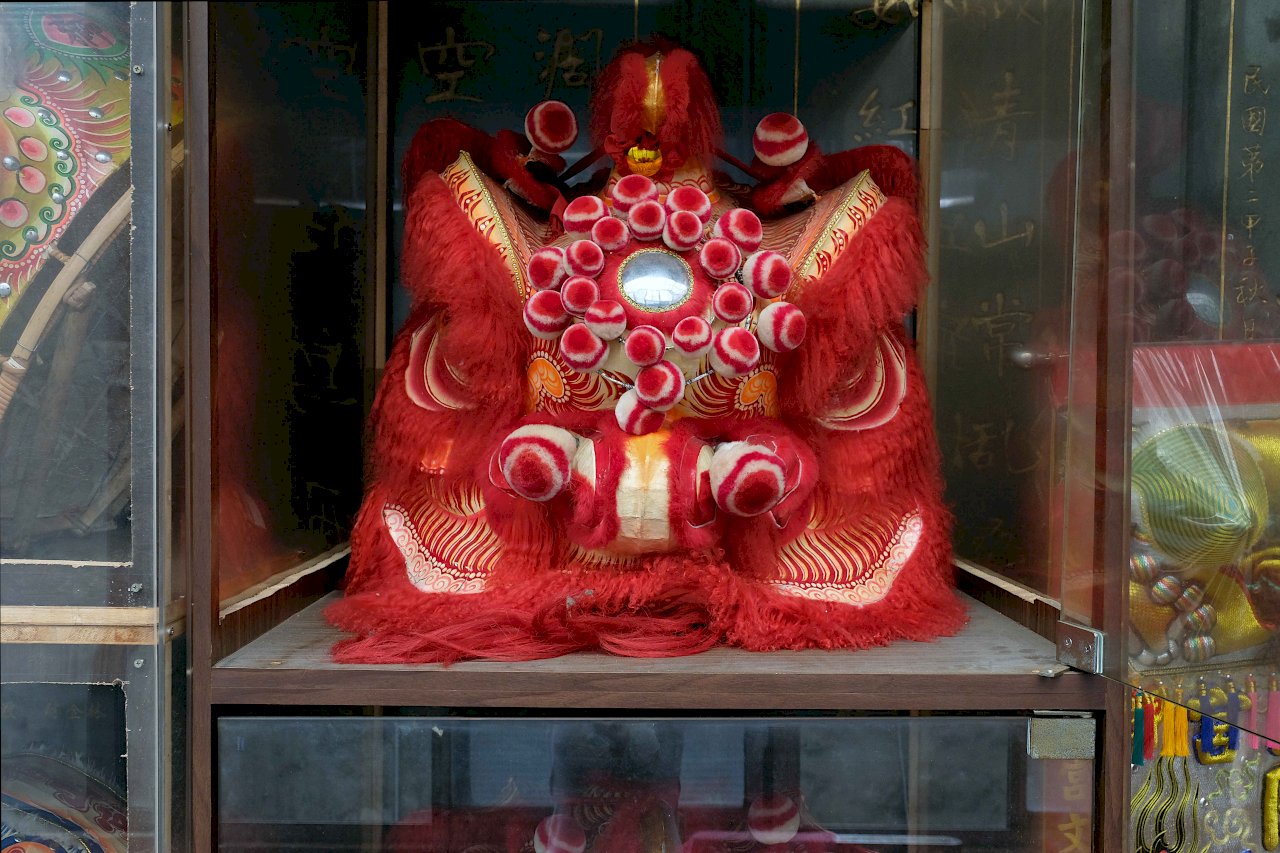
Lion dance is a traditional Chinese folk art that is performed to drums, symbols, and gongs, and combines music and dancing. The joyous activity commonly takes place in cities and villages during festivals like Chinese New Year and Lantern Festival. It is also part of temple processions, wedding ceremonies, funerals, birthdays, and other important rites in the local community and in distant localities.
Lion dance is presented by martial arts troupes, who display their acrobatic skills on makeshift stages and in the streets, generating great excitement. The lion symbolizes happiness and valor, and the dance is aimed at increasing the prosperity and good luck of deities, businesses, and households. As performers pass through the neighborhood, fire crackers are set off and red packets of lucky money put out.
In Bangka Qingshan Temple, the lion heads have shaggy manes and come in a variety of colors like red, blue, black, and white. The color red is often the most popular because it is regarded as a symbol of life and hope, and has auspicious value, warding off evil spirits.