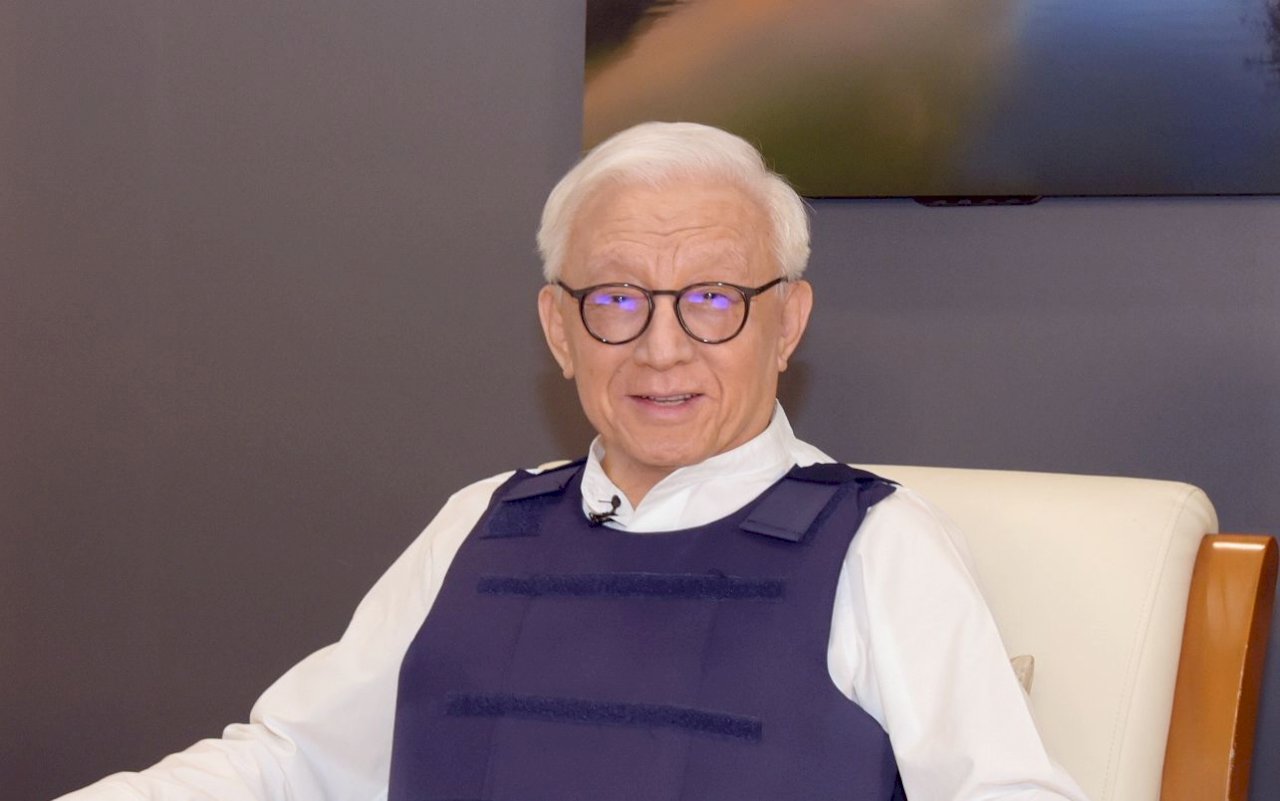
United Microelectronics (UMC) Founder Robert Tsao says the Kuomintang (KMT) party needs to give up its one China policy. He made the remarks in an interview with Radio Taiwan International on Tuesday. The UMC is the world’s second-largest contract microchip maker.
Tsao recently announced he is donating NT$3 billion (US$100 million) for Taiwan’s defense. As China has been elevating its military threat against Taiwan, he said the people of Taiwan need to be determined to strengthen the nation’s defense abilities to deter China from attacking Taiwan.
He criticized the opposition KMT’s 1992 Consensus policy in which Taiwan and China agree to one China, but each side has its own interpretation. He said that’s because China has never accepted another interpretation.
Tsao also said that the KMT’s one China policy has obstructed Taiwan’s global recognition. The KMT put the Republic of China as the only China in the constitution because, at the time, it wanted to conquer the People’s Republic of China, but he said this has led to Taiwan’s unclear international status. He noted Taiwan had the chance of being recognized as a separate country in the United Nations in 1970, but Chiang Kai Shek rejected that opportunity because of his insistence on one China. Tsao emphasized that the KMT’s one China policy is the root of the challenges Taiwan faces in its global identity.
He also said that the United States and other countries should recognize Taiwan as an independent country but it is difficult for other countries to do so when domestic parties also affirm a one China policy.
The tech tycoon said he was in Hong Kong for nine months in 2019 and saw it change “like a virus took over” due to China’s oppression. He called on the people of Taiwan to not let China take over Taiwan.
Tsao, 75, is the founder of Taiwan’s first semiconductor foundry. The UMC faced controversies and business losses when it established a Chinese subsidiary HeJian Technology, China’s second largest semiconductor foundry.
Tsao became a formal Singaporean citizen in 2011.
Tsao has not specified how his donation is to be spent, but suggested it could fund national defense education and counter China's disinformation and cyber attacks.