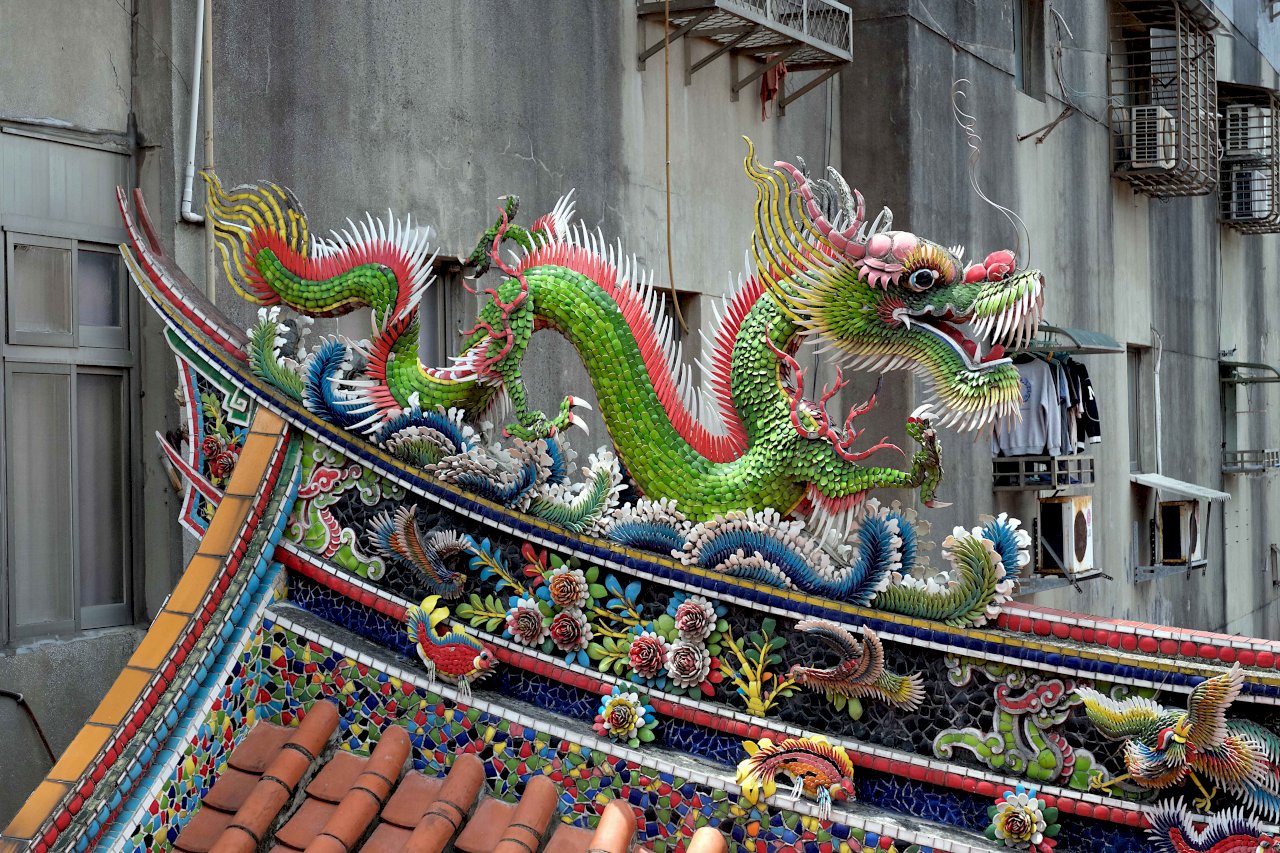
Animal figures and floral motifs are characteristic of Taiwanese temple roofs. The ornamentation is part of a tradition that has existed since at least the Han dynasty (206 BC - 220 AD). These unique characteristics are particularly auspicious and depict various blessings such as happiness, longevity, and good fortune.
Among decorative elements, the dragon ornament is a powerful symbol that usually features prominently at both ends of the main ridge of the temple roof. Symbolizing power as well as protection, the dragon looks to be riding on waves and is invariably associated with water. Thus, its image graces the top of buildings, which are constructed of wood, to invoke protection against fire and lightning.
The dragon is called chiwen, which is a term that literally means “owl” and “mouth”. Although its origins are generally unknown, the word suggests that the creature may have once taken on the appearance of a type of bird. In many temples in Taiwan, however, the dragon bears a more fish-like shape that highlights a link to Guangzhou. Leaving aside questions of mythology, the dragon remains an important component of traditional Taiwanese heritage.