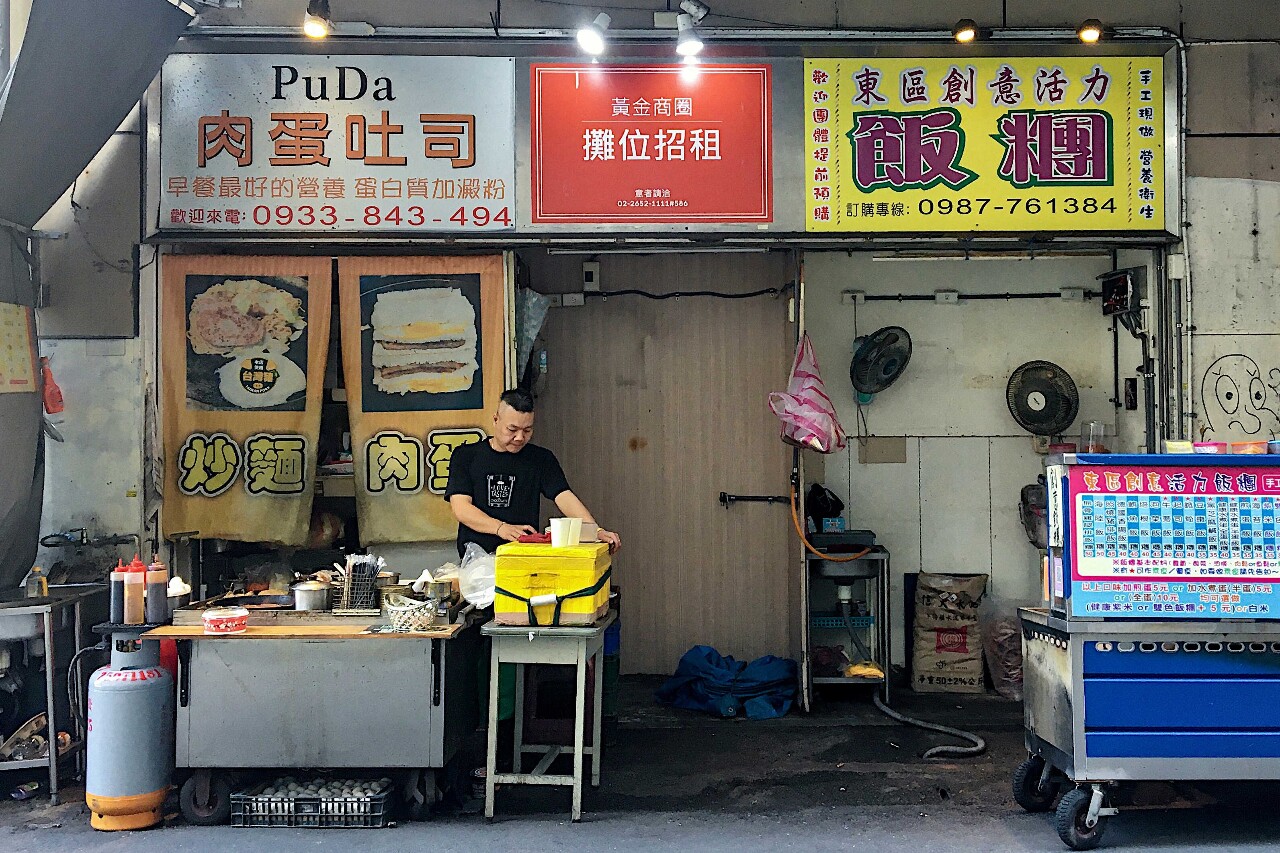
A food vendor sells affordable take-away breakfast to customers from a small stand facing the street. His stall is equipped with a stove and skillet, and offers a choice of stir-fried noodles or ham and egg on toast. The instant hot meal is appreciated by working-class people and students heading to the office or school as well as other neighborhood residents, who would rather eat out than cook.
Food stalls like PuDa’s in Taipei sell a wide variety of western style and local Taiwanese breakfast options. They may include porridge, steamed buns, unsweetened fried dough, noodles, or turnip cakes with various side dishes like salted peanuts, pickled cucumber or radish, salted or preserved eggs, fried shredded meat, and spiced, dried bean curd.
An assortment of sandwiches with a filling of ham and egg, cheese and tuna, or peanut butter and strawberry jam spread on a slice of white or whole wheat bread can be another popular choice. Drinks usually include salty or sweet soybean milk, milk, tea, coffee, or fruit juice.
Other than western style and local Taiwanese food, some establishments may also incorporate a variety of Asian, Indian, and other cuisines into their cooking. These offerings may be authentic or adaptations shaped by customers’ tastes and the creativity of the chef.
The wide-ranging selection of flavors, ingredients, and cooking styles in Taiwan reflects a considerable criss-crossing of culinary influences. Such diversity embodies a local food scene that both originates from around the world and is uniquely Taiwanese in the world.