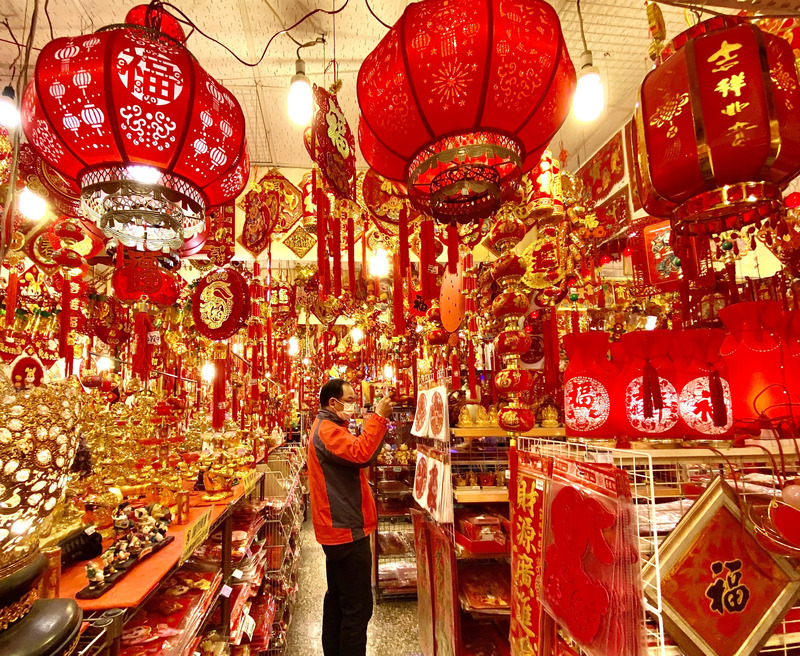
Chinese New Year's Eve is the most important occasion for Chinese-speaking communities all over the world and it marks the beginning of the Chinese New Year holiday. In Taiwan, the holiday lasts for at least one week and all schools and offices are closed to celebrate the centuries-old festival.
On New Year's Eve, family members get together to enjoy a sumptuous feast that includes all kinds of goodies such as fish, chicken, beef, abalone, sea cucumber, Chinese sausage, Chinese ham, rice cakes, veggies, and so on. To symbolize family reunion, an extra pair of chopsticks and one rice bowl will be placed on the dining table for those who couldn't make it due to other obligations such as working on a night shift.
Traditionally, the home-made feast for a large family of three or four generations is prepared a week in advance though more and more people nowadays buy gourmet food to make things easier. In recent years, dining out at a fancy restaurant or a five-star hotel on New Year's Eve has become a popular growing trend and bookings are closed early. Customers are willing to pay exorbitant prices. The sky's the limit for some. But some say the practice lacks the traditional family festivities and is a bit too unconventional.
Children love Chinese New Year Eve because that's the only day they get to stay up late until the wee hours. Parents make the exception for them so that they don't miss the excitement of welcoming the New Year at midnight by setting off firecrackers. They are also allowed to gamble with cards and dice games together with adults. What's more, children will get some "lucky money" from their parents and grandparents after the New Year's Eve dinner. Enclosed in red envelopes, the so-called lucky money is supposed to get rid of evil spirits. Though the amount is usually fairly small, the extra allowance certainly brightens their holiday.
In Chinese-speaking communities, rituals that show reverence for ancestors or deceased family members are an integral part of traditional festivals. On New Year's Eve, some families will perform a simple ritual ceremony by burning paper money or incense sticks, or bowing or kneeling down in front of an ancestral tablet. Others will visit their family graveyard in the following days to pay their respects. In a symbolic gesture, some people will also offer food to their ancestors and each meal is freshly-prepared.