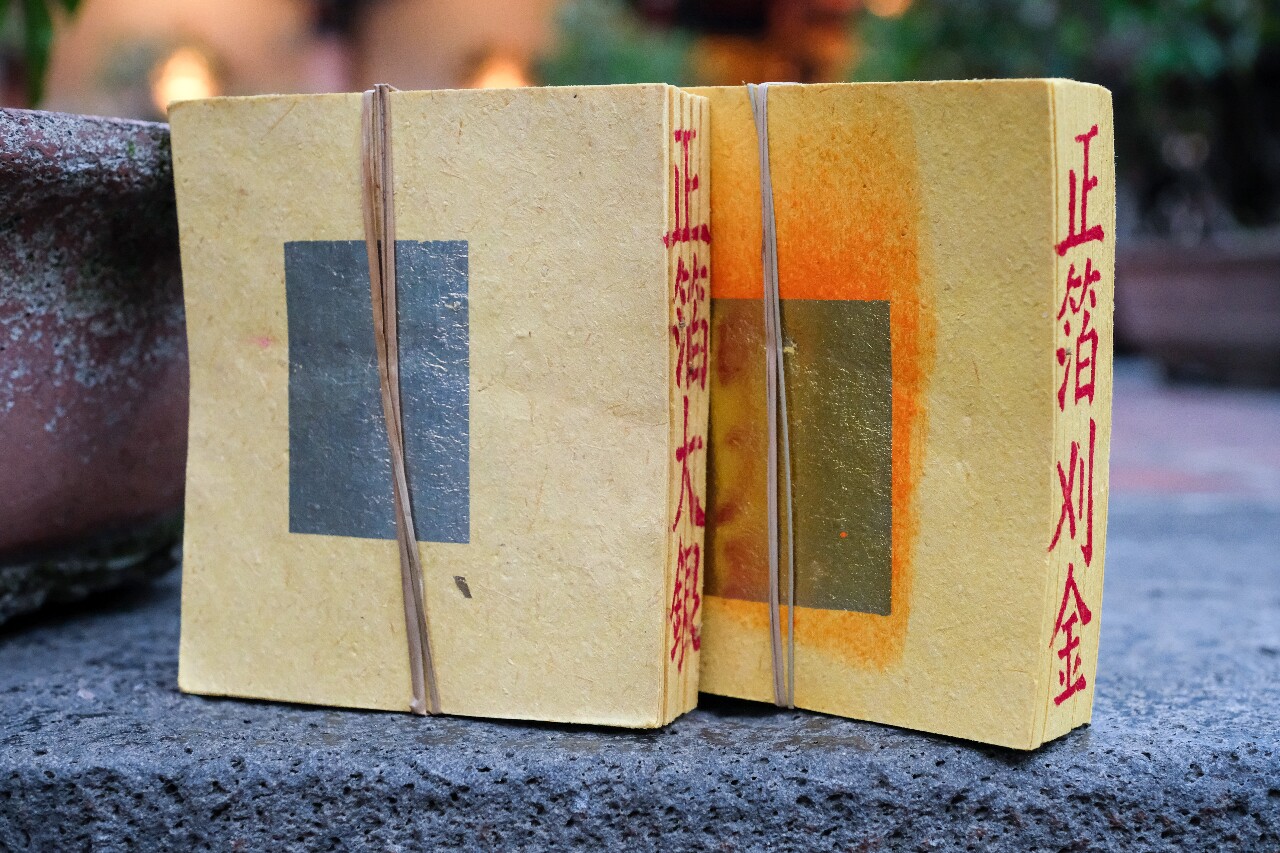
Sheaves of coarse, yellowish votive paper cut into a square, the center of which is decorated with tinfoil, are tied together with straw. The traditional papers are sold at a small religious artifacts shop in the Datong district in Taipei.
The proprietor explained the significance of the objects and the shifting values of the market. Silver, which is associated with the underworld, is laminated aluminum foil that is burned to worship ghosts and ancestors. In contrast, gold tinted paper also contains a square of silver tinfoil that has been covered with a streak of reddish yellow paste. Unlike silver, replicas of gold paper money are usually offered only to gods.
Traditionally, paper offerings commonly seen in the market came from local resources: string was made of straw that had to be thoroughly dried as the stalks contain moisture, which if it is not eliminated, causes the papers to mold. Paste was made from sweet potato starch while dye was made from boiling leaves. The process required local knowledge, skills, equipment, and innovation, which vested the items with distinctive cultural, spiritual, and artistic meaning.
Nowadays, there are hardly any remaining villages and artisan workshops in Taiwan that specialize in the manufacture of ritual currency. Many kinds of paper money are mass-produced in Vietnam, where production is cheap, and the premium natural fibers have been replaced with low quality commercial materials, like plastic and rubber. As a result, larger quantities of papers can be purchased at a significantly lower price, which customers prefer, while many of the religious or sacred dimensions of the offerings have been effaced.