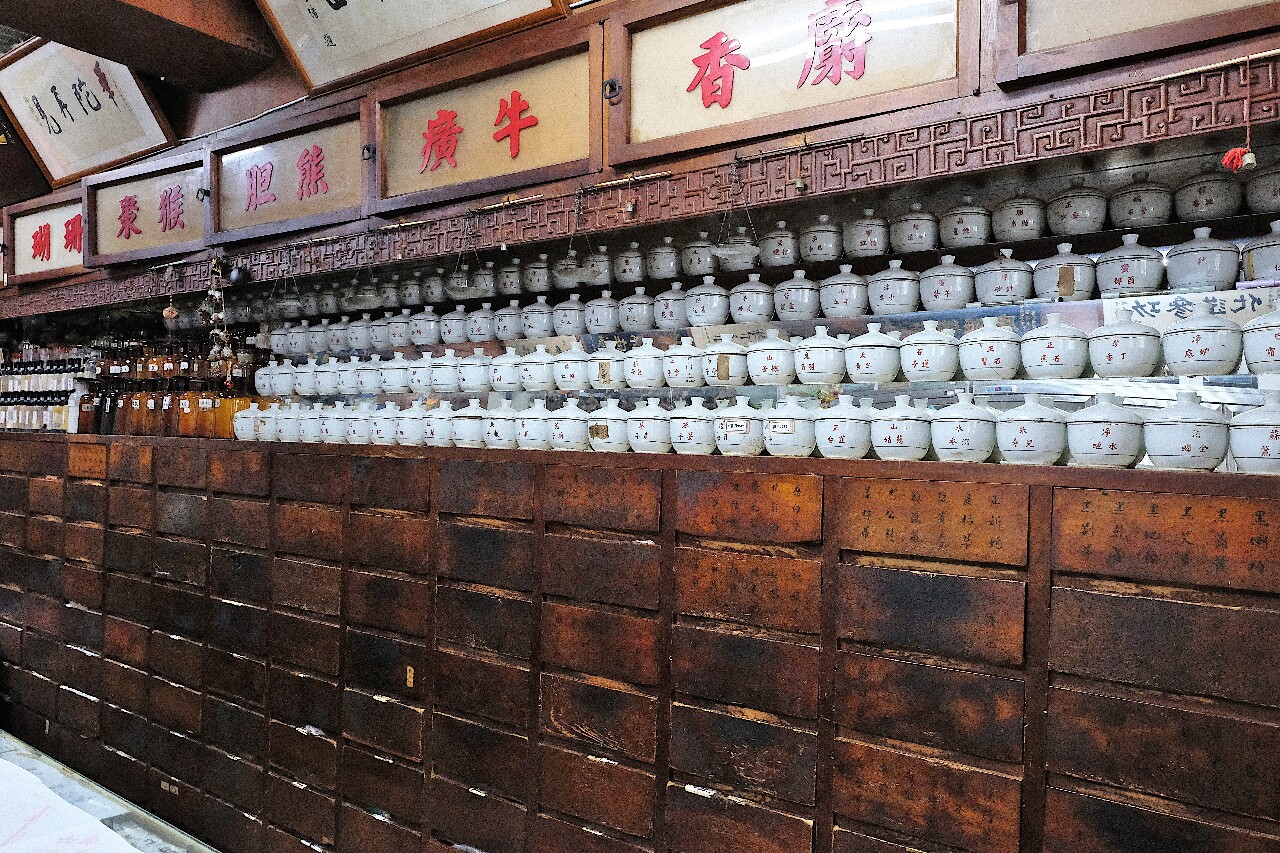
Rows of wooden drawers, brown glass jars, and white porcelain crocks filled with curative herbs and minerals line the display case of remedies behind the counter in a Chinese medicine pharmacy in Taipei. Each receptacle is carefully labeled by hand, identifying the particular plant or potion inside, such as “baby’s breath” (Gypsophila) or “throat powder”.
The apothecary is owned by an elderly man, who began his apprenticeship as a pharmacist of Chinese medicine under his father. His forefathers had all been respected pharmacists of Chinese medicine, and his family had once had a thriving business in Fujian before resettling in Taiwan in the mid twentieth century.
Chinese medicine is quite different from Western medicine, the pharmacist explained. Whereas Western medicine often conceives of bodily parts as separate and independent, Chinese medicine considers the whole body and is associated with influences such as cold or heat.
If the relationship between these factors is imbalanced or out of alignment over a period of time, this can manifest as symptoms. In response, practitioners of Chinese medicine may design a treatment approach that is personalized to the individual patient, including special herbal formulas with specific preparation methods and times.
In the end, the pharmacist emphasized the value of both the Chinese and Western framework, without favoring one approach over the other. Indeed, in Taiwan, different kinds of treatment are often used in synthesis to obtain the best possible results in patients.