Recently, two women approached a security guard standing outside the entrance of Longshan Temple, a crowded metropolitan area in downtown Taipei with a near-constant flow of foot and road traffic.
“Is there a garbage can around here?” one woman asked with a look of dismay on her face. Next to her, her elderly companion was needlessly holding on to a crumpled piece of tissue and used plastic wrapper.
“No, there are no garbage cans around here,” the security guard responded indignantly as though the woman had posed an absurd question.
It was a familiar scene and particularly relatable to anyone, who has grappled with the simple inconvenience of wanting to throw away a small piece of garbage in Taipei – a problem that luckily has not resulted in mountains of litter, but conceivably could.
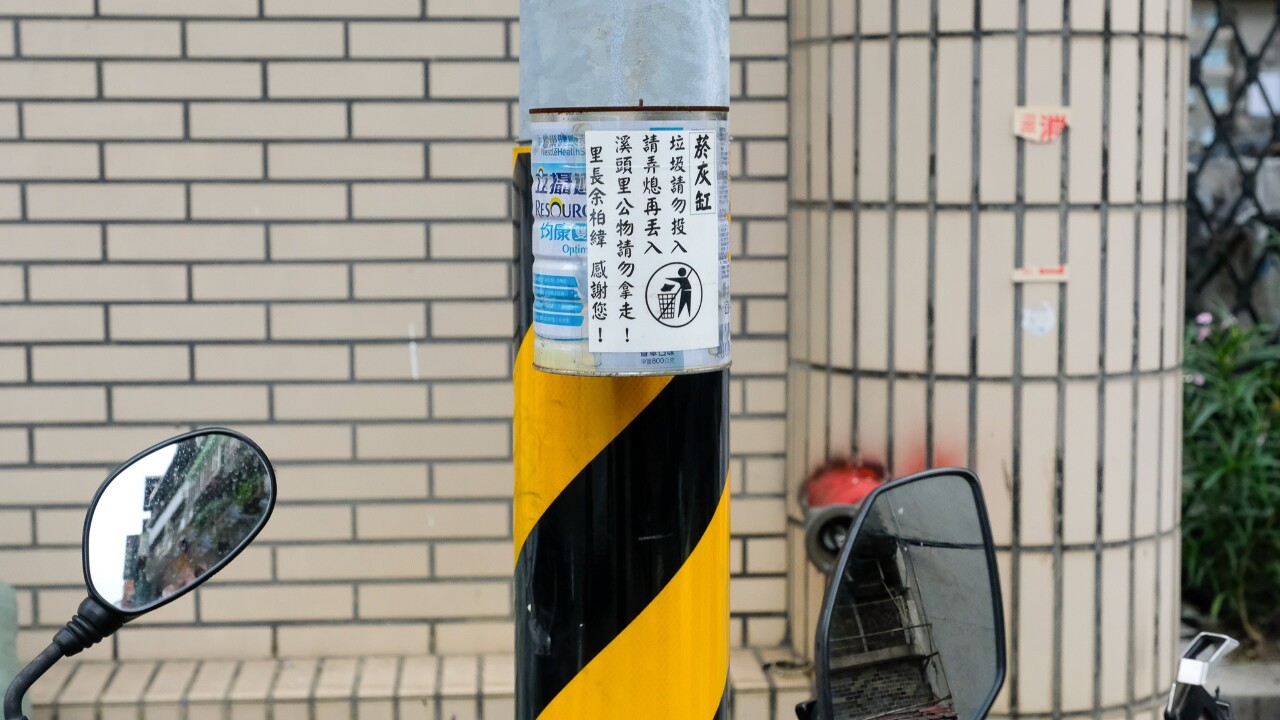
To hear residents relay the story of Taipei’s missing garbage cans, they were once prevalent in the city and commonly found around intersections and on street corners. To elide municipal waste collection fees, however, households and businesses increasingly took to dumping domestic trash in and around the public receptacles.
This created piles of rubbish overflowing onto city streets, attracting rats and roaches and increasing the risk of disease. To combat the infestation, the municipal government adopted the somewhat draconian measure of removing garbage cans from city streets almost entirely.
While most people comply with the government’s directive, shifting responsibility on to the public does not actually offer a solution to the problem. Nor does it simply absolve the government of its obligation to continue to manage public order and provide trash cans.