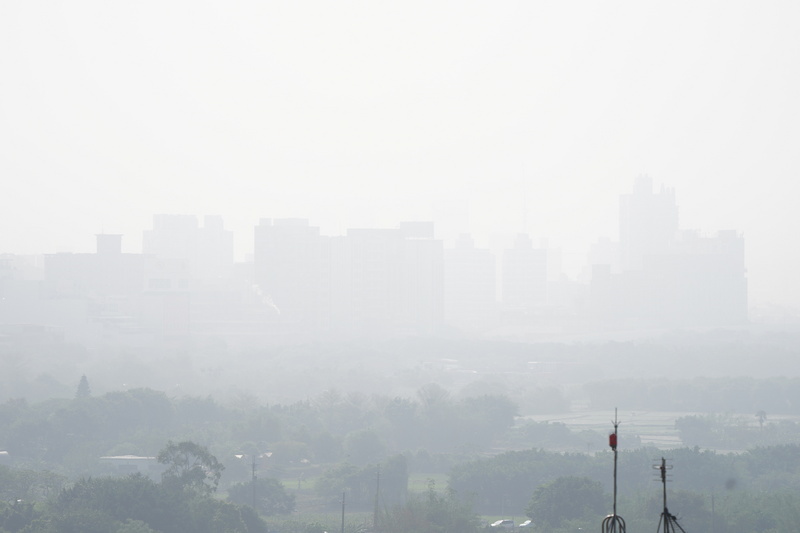
The Environment Ministry’s Taiwan Air Quality Monitoring Network released its 2023 air quality monitoring results on Tuesday. The report indicated an overall decrease in pollutant concentrations over the past eight years, however, it showed a rebound in the annual averages of various pollutants in 2023 compared to 2022.
According to the data, the nationwide average concentration of fine particulate matter (PM2.5) increased to 13.8 micrograms per cubic meter in 2023 compared to a record low of 12.4 micrograms per cubic meter in 2022. The increase is attributed to a decrease in rainfall days and an increase in low wind speed hours, hindering dispersion and removal of pollutants. However, the number of PM2.5 red alert pollution days at monitoring stations decreased from 45 in 2022 to 18 in 2023.
The ozone (O3) concentration also increased by 1.8 parts per billion with the number of red alert station days increasing from 69 to 73 in the same period. Chang Shun-chin (張順欽) of the Environment Ministry’s Atmospheric Environment Department says that ozone issues are more prevalent in spring and autumn. He says higher temperatures and reduced rainfall in 2023 provided favorable conditions for ozone formation, contributing to the observed increase in ozone concentration. Chang adds that despite an increased concentration this year, the recorded high was lower than last year.
Chang says the ministry aims to prioritize air quality improvements in central and southern Taiwan targeting a reduction of PM2.5 concentrations to 15 micrograms per cubic meter. Additionally, it aims to decrease the number of red alert days for ozone by 80% compared to 2019 levels.