At a Chinese medicine apothecary in Taipei, an elderly man was waiting alongside the counter for the pharmacist to fill an herbal prescription for his 96-year-old father.
“Where are you from?” he wanted to know good-naturedly.
He had spent two years studying in the former West Germany, before pursuing a career in technology that had taken him around Europe and Asia. Now, at nearly 70 years of age, he was still conducting some business and retained a youthful curiosity and affable manner.
“I grew up in Tainan,” he said, sharing that his family had arrived in southern Taiwan from Quanzhou prefecture in Fujian province in the 1700’s.
“Life under Chiang Kai-shek was terrible,” he remembered, describing the repressive martial law period of his childhood and its accompanying White Terror.
“We were indoctrinated with Nationalist ideology and inculcated with hostility. Everyone was our enemy except China, and all we were allowed to talk about was ‘retaking the mainland’.”
Drawing his index finger across his throat in an apparently universal gesture of brutality, he asserted, “Just mouthing the word ‘Taiwan’ was itself a death sentence.”
“But Taiwan has changed immensely in just a few decades,” he acknowledged, heralding the shift toward full-scale democratization from the 1980s opening the way to new opportunity and a rapid rise in living standards.
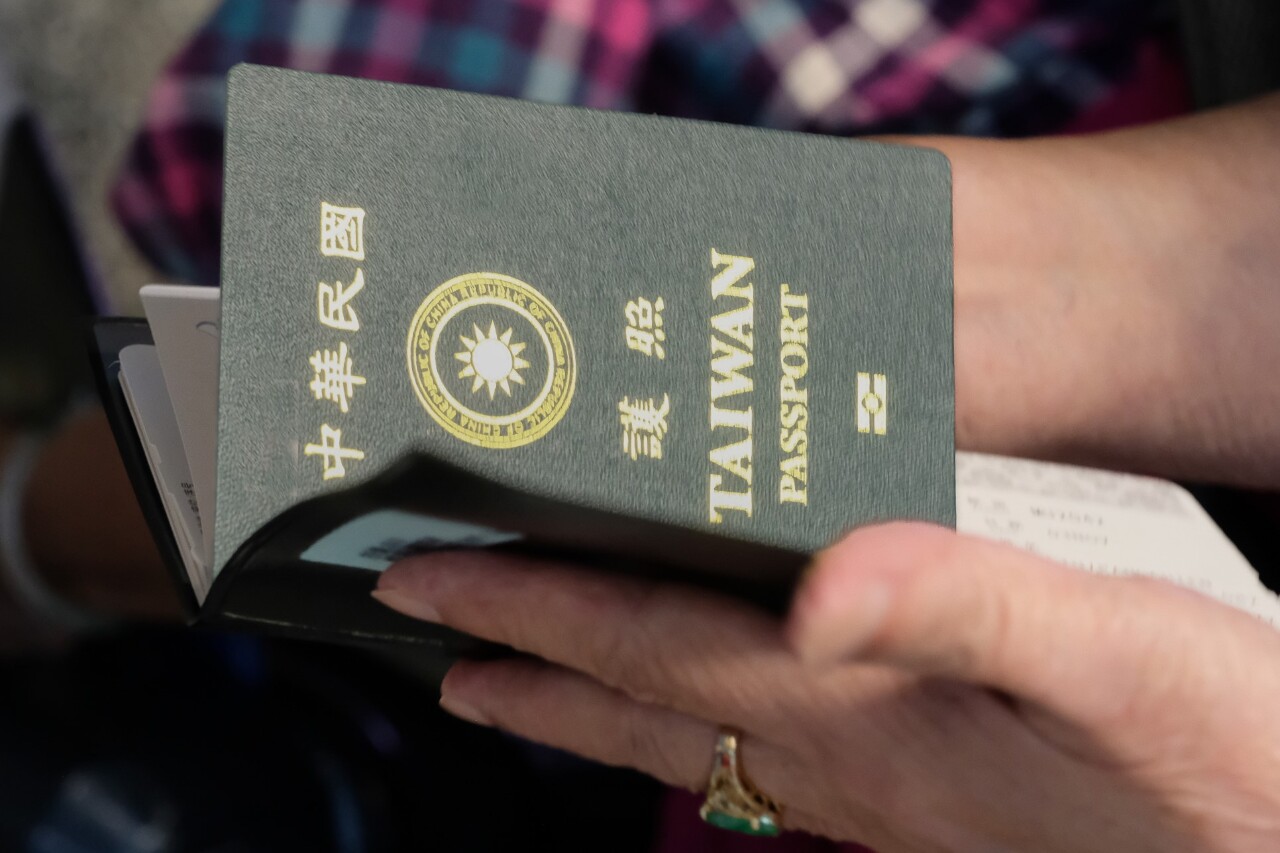
“Taiwan has always had a commitment towards progress and prosperity, but it lacks a sense of national identity. It’ll be a critical issue during the elections,” he cautioned, echoing the sentiments of many.
In the absence of a shared frame of reference for diverse groups of people, he offered a brief sketch of the population in lieu of a definition of nationhood.
“Do you vote?”
“Of course!” he conceded, unsurprisingly. Taiwanese people’s propensity to vote is about as defining a marker of national identity as any.
“Taiwan is a democracy. It’s very important for everyone to have a voice,” he said, evoking a starkly different tone from China’s, where “only one voice” matters, that of Xi Jinping.
“It takes only 51 percent to win,” he continued, emphasizing the importance of having a majority and the difference one person’s vote can make.
“I don’t harbor any resentment against the KMT for the past. I just want what’s best for Taiwan and vote for whichever party I believe has the Taiwanese people’s interests at heart,” he explained, projecting forgiveness and impartiality.
“Unless the KMT were to change its name from the KMT of China to the KMT of Taiwan, however, I would never vote for the KMT.”
Note: The Kuomintang (KMT, or Nationalist Party) is the shorter English name of the party. The full Chinese name is “Chungkuo Kuomintang” (the Kuomintang of China).