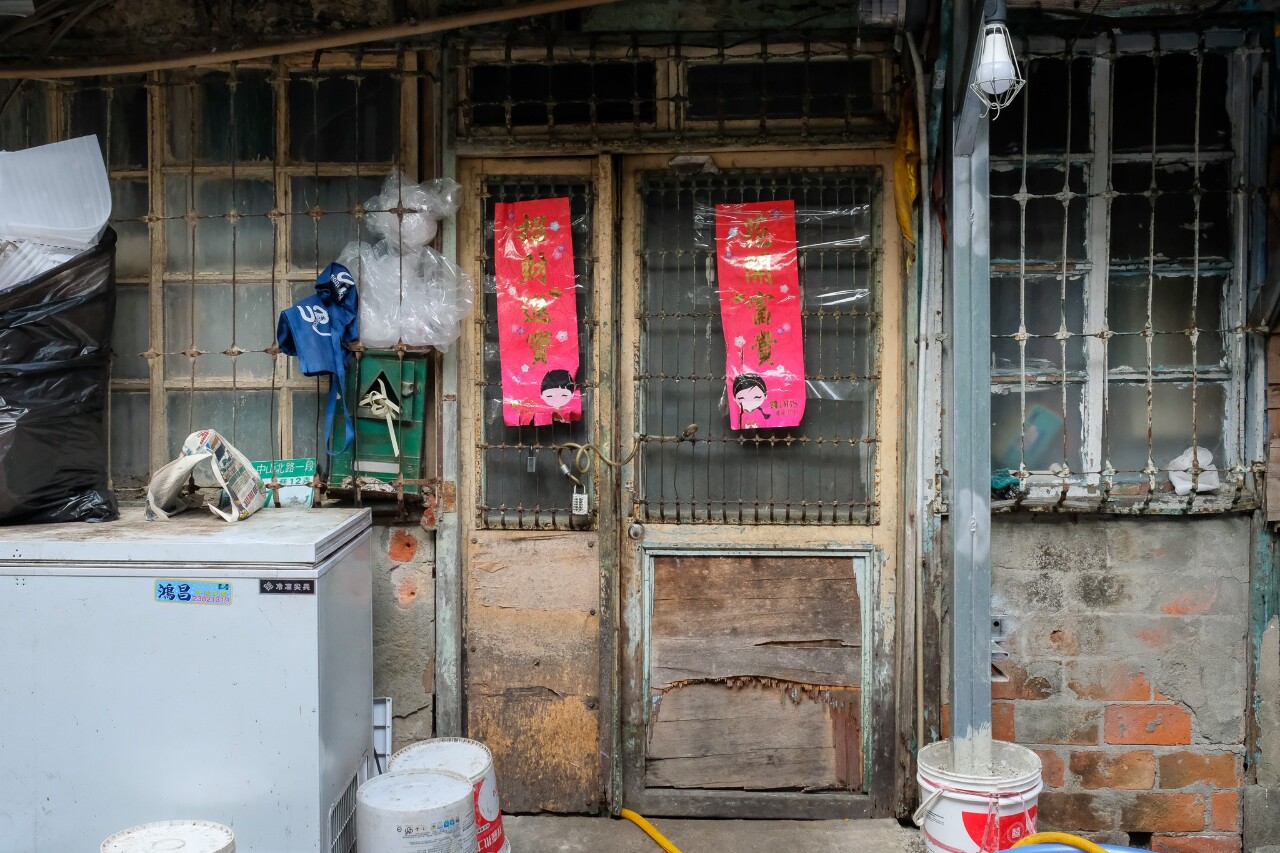
January is the last month of the lunar calendar, which is one of the most important times of the year. During this busy period, many households, offices, and temples will enact rituals to stir up a favorable mood for the lunar year ahead.
One classic example of this is the pasting of new auspicious red paper couplets on either side of and across the top of the main doorway. Such inscriptions are usually four or eight characters in length, although they can entail any number of characters, and are intended to embody the wishes of the family, business, or organization.
Traditionally, they express sentiments of happiness, harmony, wealth, longevity, prosperity, strength, merit, and protection, as well as other hopes and desires. Some of the most popular expressions include phrases like nian nian facai, which means to attain wealth every year, and sui sui ping’an, which translates as passing the years peacefully.
Regardless of their specific content, these scrolls tend to be written in black or gold calligraphy and do not contain figural images. In addition, parallel couplets must use an identical number of characters and be constant in composition, syntax, and structure.
Another general rule is that the decorations are left up until the next new year to convey people's good wishes, rather than taken down after the holidays. Reading between the lines, although these strips of paper teach different virtues, their underlying message is the same: to encourage culture and learning.