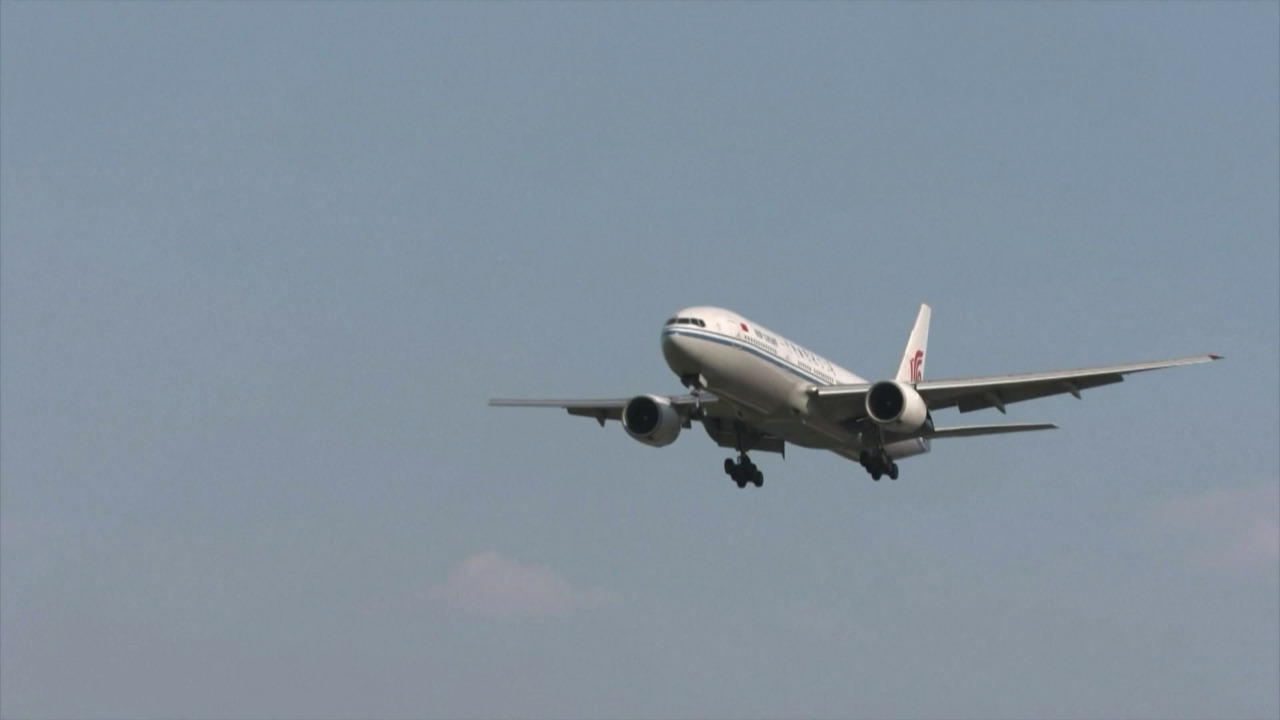
Cross-strait tensions can sometimes arise in unexpected areas. Case in point, China’s recent modification of a domestic passenger flight route is causing an uproar in Taiwan.
Video script:
The Chinese government announced Tuesday that it will move a controversial flight path closer to Taiwan. Beginning February 1, the M503 flight path used for passenger flights will move 6 nautical miles closer to the Taiwan Strait’s median line, making its closest point only 4.2 nautical miles away from the median.
China also announced new flight paths from Xiamen and Fuzhou which will pass very close to Taiwan’s outlying islands of Kinmen and Matsu.
The current flight path from Fuzhou to northern Taiwan travels up the Chinese coast before flying around the median line back down to Taiwan. The new path will fly directly east to the median line, then turn sharply north near the line, and return south to Taiwan.
Former Air Force deputy commander Chang Yen-ting (張延廷) says China’s decision was made unilaterally without any consultation because China views it as a “domestic route”. He says China wants to demonstrate its control of the airspace.
Defense Ministry Spokesperson Sun Li-fang (孫立方) says China’s provocative behavior can cause tensions to escalate quickly and undermines stability in the strait. He says Beijing should stop this destructive behavior immediately.
Military experts say the route could make it easier for China to disguise military aircraft as civilian aircraft in an invasion scenario.
Former deputy commander Chang says that with this tactic, China could seize all seven of Taiwan's major airports with just 14 planes loaded with 200 soldiers each. If such an operation succeeded Chang says, China could quickly reinforce these areas.
Taiwan has objected to route M503 since it was unilaterally declared in 2015. It demonstrates how civilian and military issues can easily become intertwined in cross-strait relations.