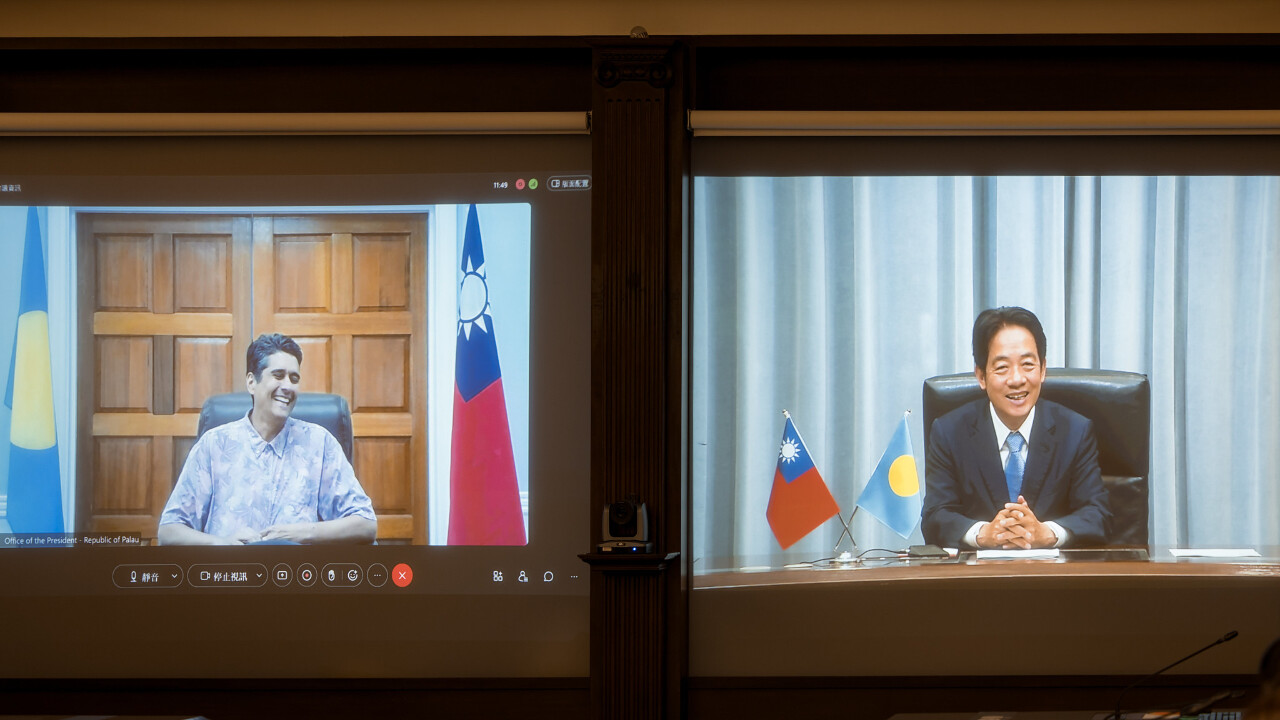
The Foreign Ministry highlighted cooperation between Taiwan and its ally Palau on Friday, following reports of Chinese financial incentives to break ties.
A letter reportedly written by Palau President Surangel Whipps Jr. to an unnamed U.S. Senator surfaced on the internet Thursday. In it, Whipps claims that China has offered to “fill every hotel room,” in Palau, “and more if more are built” if the small island nation were to break ties with Taiwan. The letter further claims that China offered US$20 million per year for the creation of a “call center” in Palau, a country whose economy relies heavily on tourism.
Whipps’ letter was sent to encourage the U.S. Congress to approve an agreement known as Compacts of Free Association (COFA). COFA governs the relationship between the United States and the Pacific island nations of Palau, the Marshall Islands, and Micronesia. The agreement has been signed by representatives from all party states, but the implementation of the agreement must first be approved by Congress before becoming law and before assistance funds can be released.
On Friday, Taiwan’s Foreign Ministry said that President Whipps has been a steadfast advocate for Taiwan in the international arena. It adds that Whipps personally spoke in support of Taiwan’s participation in international organizations at the United Nations General Assembly and the COP28 conference.
The ministry says that President Whipps spoke with Taiwan President-elect Lai Ching-te (賴清德) in a video call following his election victory. During the call, Whipps congratulated Taiwan’s demonstration of its democratic values and said that Taiwan-Palau relations were stable and growing.
The ministry says that the situation demonstrates the difficulty small island countries face in dealing with economic coercion from China. It adds that it empathizes with Palau and will continue to provide specific support and development assistance to Palau, including maintaining direct flights from Taiwan to the country to help sustain its tourism economy through the COVID-19 pandemic.