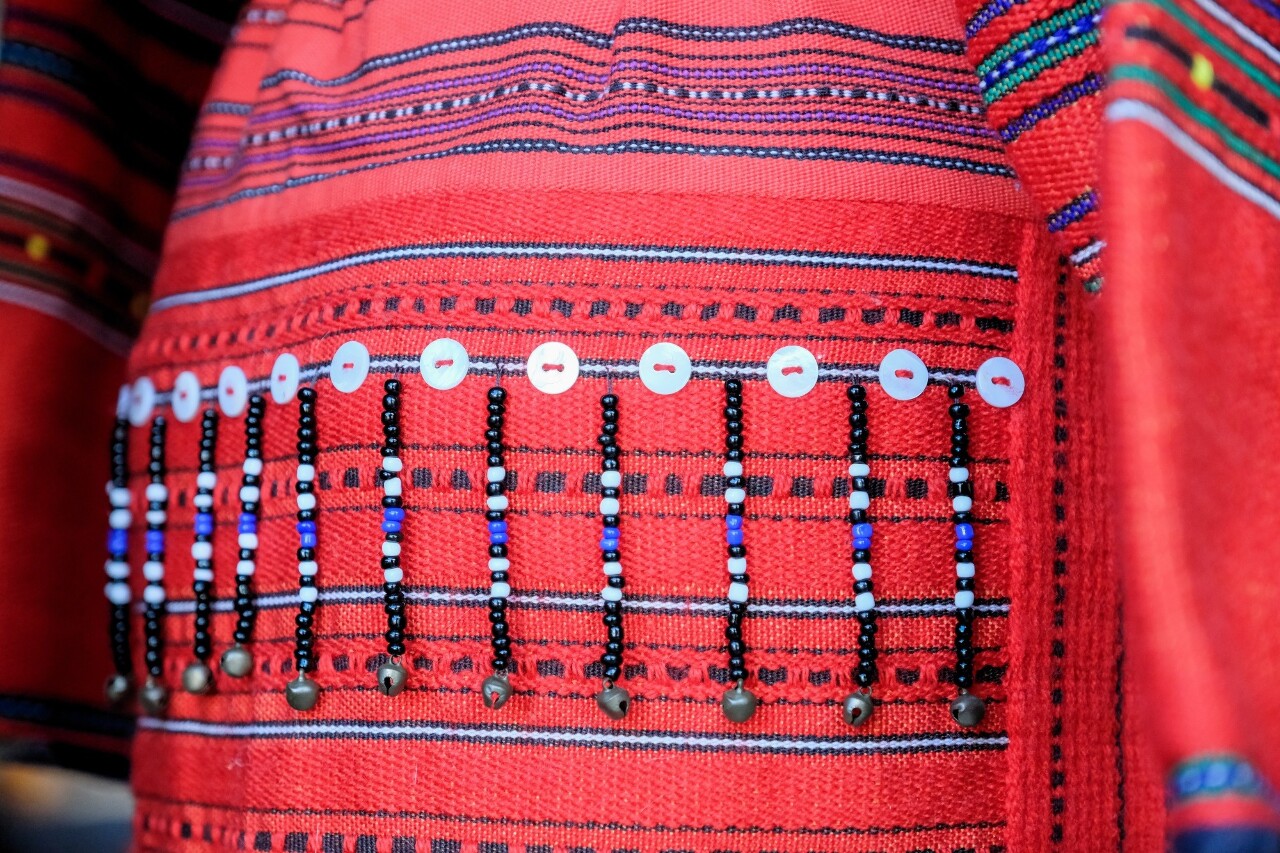
Traditional garb was once an important way for members of the Indigenous Seediq community to define themselves. The distinctive styles of dress included shirts, jackets, and large cape coverings tied across the shoulder, as well as skirts of red and black ramie and leggings tied around the leg below the knee.
Woven by highly skilled women using rudimentary looms and natural resources, these garments were both markers of adulthood and ability as well as signs of wealth and social status. Fabrics were valuable and production labor-intensive, making weaving a major accomplishment for Seediq women, in particular, and, in general, for Seediq culture.
This continued until the early 20th century, after which traditional weaving was forbidden under Japanese colonial rule. In addition, the Japanese government imposed a ban on ramie plant cultivation, leading to the loss of not only traditional tools, but also materials and a whole range of expertise.
During the second half of the 20th century, various efforts to pass down traditional knowledge within the Indigenous community gained little traction. For the younger generation, higher levels of education offered job opportunities and resources, while weaving was not viewed as a viable way to earn money or improve marriage prospects. This lack of interest made it more difficult to protect traditional skills and prevent the loss of Seediq heritage and identity.
Since then, interest in textile production in Seediq communities has burgeoned through the emergence of multiple projects, including the development of a graduate education curriculum at Providence University in Taichung, village-based businesses, and craft workshops. Other public efforts that celebrate weaving include the recognition of Indigenous Seediq artisans by the Ministry of Culture as well as an exhibition at the National Museums of World Cultures in Sweden.
These initiatives have not only helped revive historical practices and memories that were thought to have disappeared, they have also encouraged their transmission to future generations.