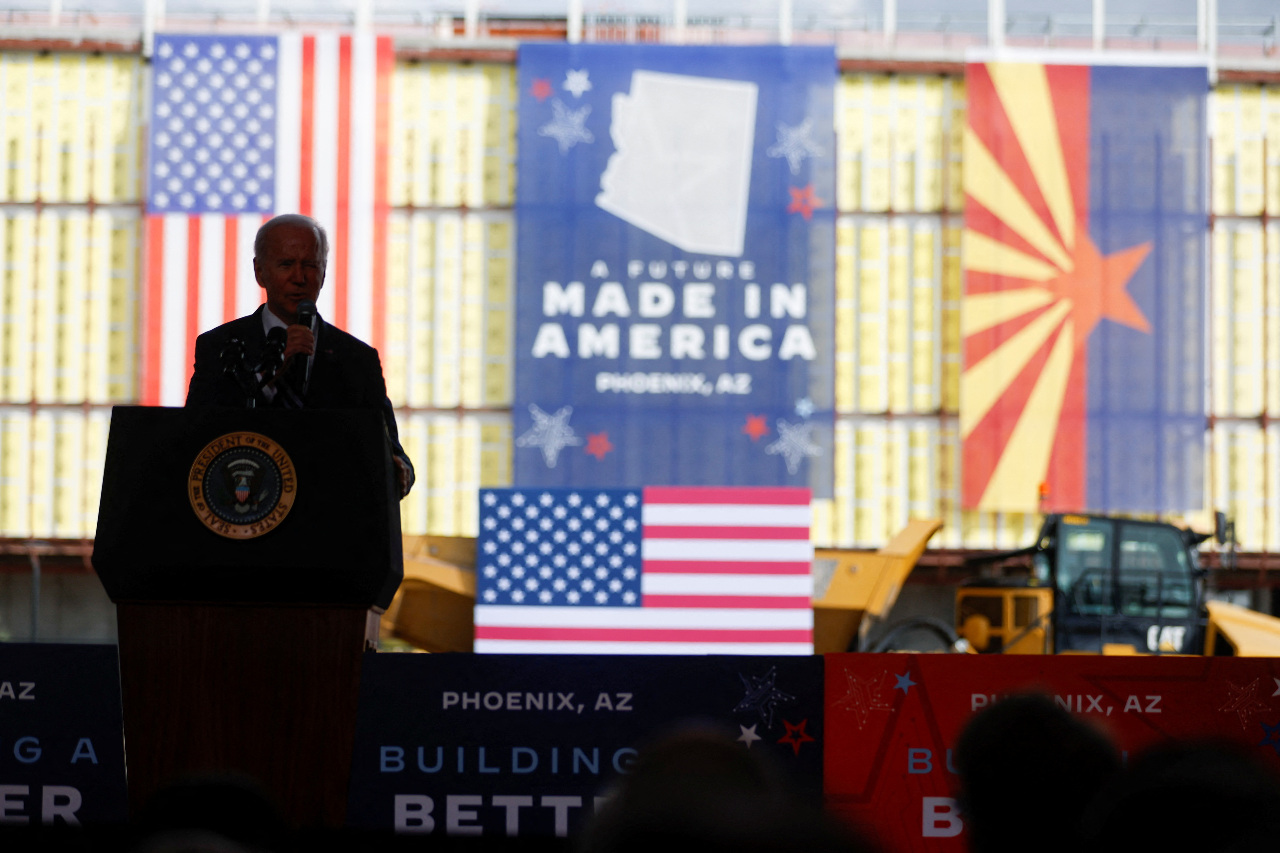
Taiwan’s chip giant TSMC announced on Monday that it has secured a US$6.6 billion subsidy from the United States to build its third factory in Arizona, aiming to produce chips using 2-nanometer or more advanced processes. Experts say that the long-term development of generative AI is driving the demand for these advanced process chips.
Ray Yang (楊瑞臨), a consulting director at the Taiwanese think tank, Industrial Technology Research Institute, has identified two main drivers behind TSMC's decision to build a third factory in the U.S. Firstly, Yang says the surge in demand for AI chips driven by advancement in generative AI highlights the potential for chip shortages. Secondly, Yang says that the U.S. is prioritizing the use of AI applications in critical sectors such as supercomputing and smartphones. This emphasizes the need for TSMC to bolster its manufacturing presence to ensure national security and supply chain resilience amid escalating U.S.-China tensions.
Yang adds that the U.S. CHIPS and Science Act, currently covering five companies including Intel and TSMC, provides over 10% of TSMC's total investment, exceeding Intel's 8.5%. He says that given Samsung's higher U.S. investment, it's expected to receive around a 9% subsidy. Yang further suggests that based on this, approximately 40% of the U.S. budget remains, and he believes there is a possibility of further subsidies for TSMC and other companies if President Biden secures reelection this year.