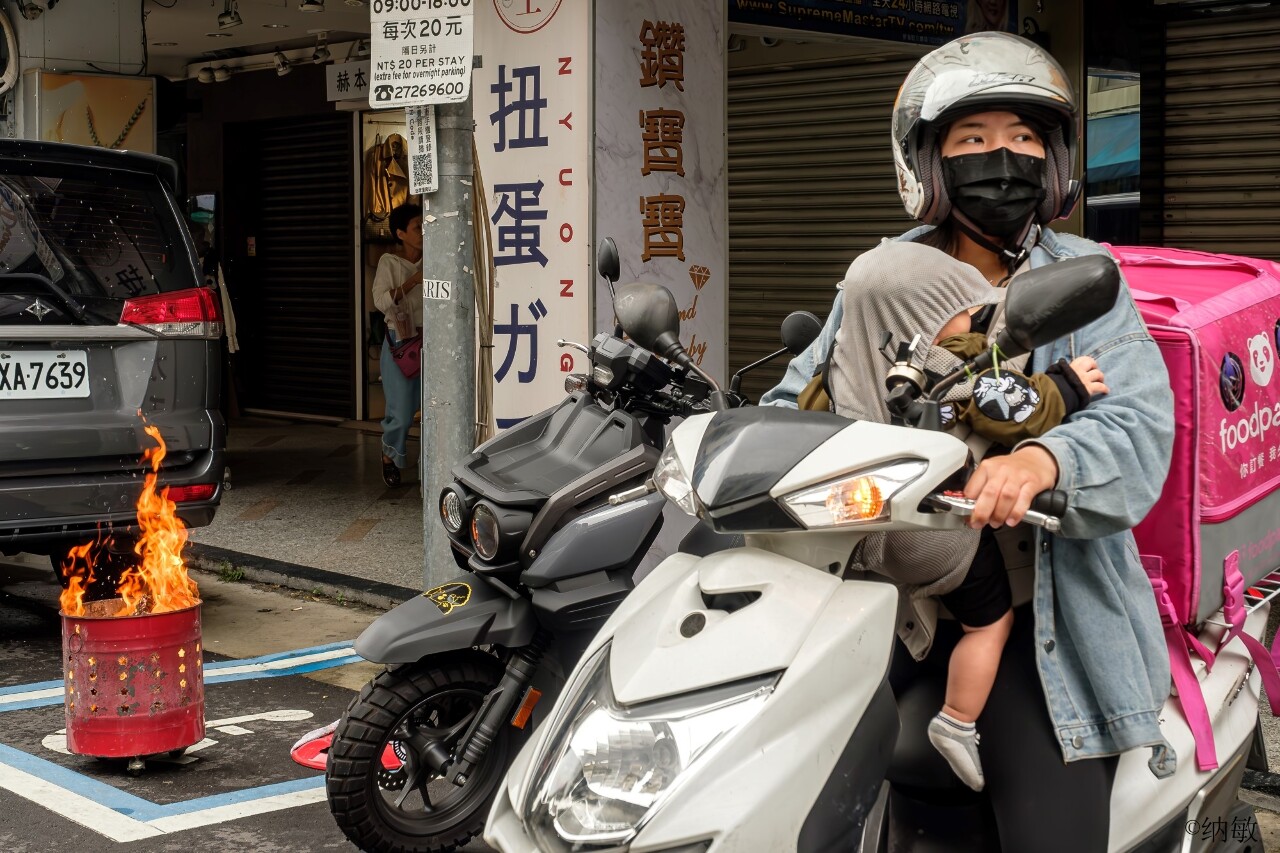
On a busy street in Taipei’s central Da’an district, a ‘delivery mother’ on a motorcycle looks for oncoming traffic with an infant strapped to her front, a large, hot pink Foodpanda carton fastened to the rack behind her, and a red brazier with burning spirit money in the handicap parking spot beside her.
As a gig worker in the on-demand food delivery industry, her job provides her more freedom and flexibility than regular employment, but also entails many physical and psychological hazards. These include safety concerns and health risks as well as heavy traffic, long working hours, and low, unpredictable wages.
For women and mothers raising young children, in particular, such challenges can be especially hard. While some women welcome the relative autonomy of delivery work, most struggle with the precariousness, insecurity, and uncertainty of the platforms.
In addition, new mothers can find the conditions of temporary employment more stressful because of the double burden of one-off, paid gigs and long-term, unpaid domestic responsibilities. Furthermore, mothers who lack childcare support must often take their children with them on rides, exposing them to the same risks related to roads and traffic accidents.
Mother’s experience in the gig economy highlights the insufficient benefits and protections delivery drivers are often extended in Taiwan. Although men still account for most contractors, to ensure fair and equitable working conditions, it is especially important to support the voices and demands of women and mothers in the sector.