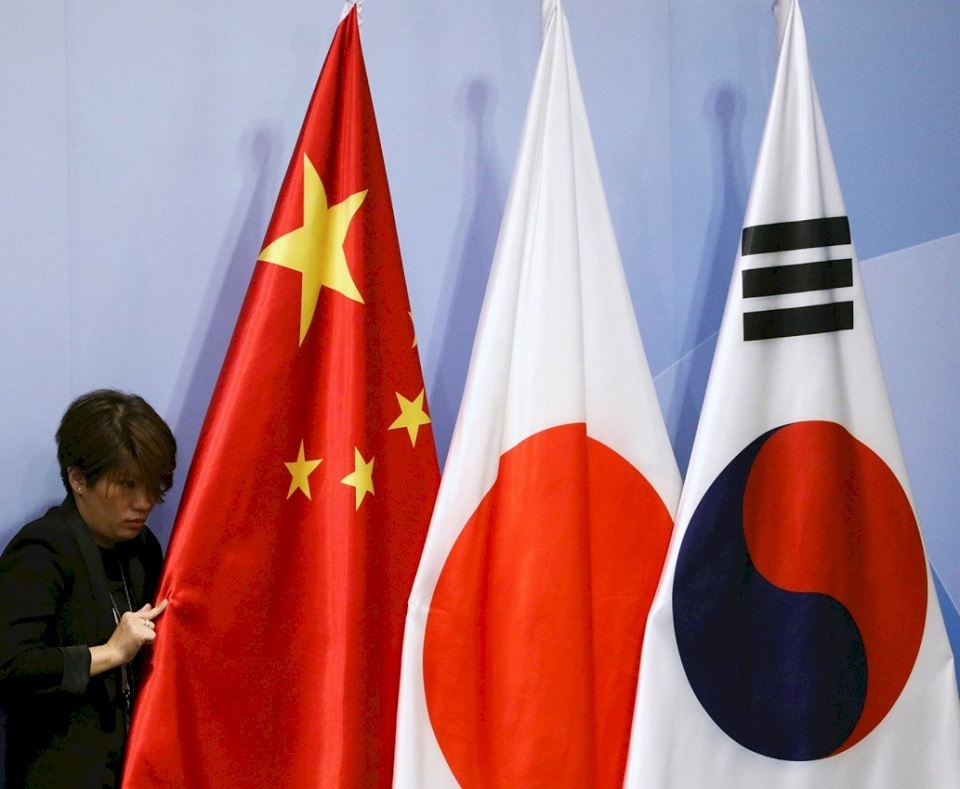
Representatives reached a consensus to resume negotiations regarding the China-Japan-South Korea free trade agreement (FTA) at a trilateral summit held in Seoul, South Korea on Monday. This is the first time discussions have resumed since 2019 when they were suspended due to the pandemic and historical disputes between the nations.
Chinese Premier Li Qiang (李強), Japanese Prime Minister Fumio Kishida, and South Korean President Yoon Suk Yeol issued a joint statement following the meeting stating their objective of realizing a free, fair, comprehensive, high-quality, and mutually beneficial FTA.
National Central University Economics Professor Chiou Jiunn-Rong (邱俊榮) pointed out that the three countries are already economic partners through the Regional Comprehensive Economic Partnership (RCEP), and already enjoy preferential tariffs, making this trilateral FTA more symbolic than substantive. Taiwan is not a part of the RCEP, and was not mentioned in the joint statement. Chiou says that while it’s uncertain, he doesn’t anticipate this FTA having a significant impact on Taiwan.
Chiou said the trilateral FTA is still far from being finalized. He also highlighted the negative effect that the China-Korea FTA had on South Korea’s economy and noted that amid the United States’ efforts to rally democratic allies together to boycott China, Japan and South Korea may ultimately decide against closer economic ties with China.