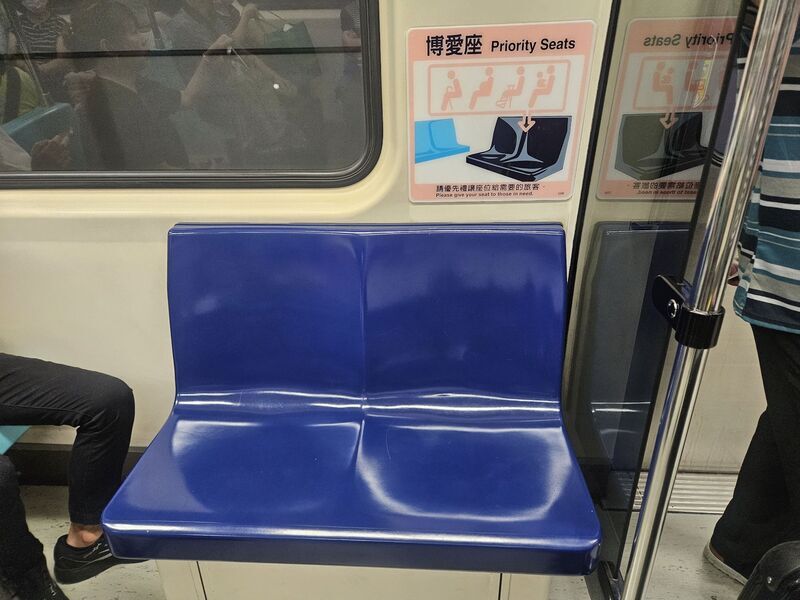
Frequent disputes over priority seats on the Taipei Mass Rapid Transit (MRT) have Taipei Mayor Chiang Wan-an (蔣萬安), Metro Taipei, and the Health Ministry discussing the future of the feature currently installed in each train carriage.
Just last week a female passenger on the MRT Tamsui-Xinyi line was confronted by other passengers who asked her to give up a priority seat. The confrontation ended in a face full of blood for the woman, who hit her head on a pillar shortly after mediation with the station manager and security. Then, this Tuesday on the MRT Songshan-Xindian line, an elderly man asked a younger man to vacate his priority seat. After the younger man expressed his need for the seat due to being physically unwell, the exchange escalated and became physical.
Chiang spoke this Wednesday regarding the issue, stating that priority seats should give a human touch to the city. He says how they are used should be guided by the public’s goodwill and courtesy rather than manipulation tactics. Chiang says he hopes the few negative incidents will not taint the spirit of the priority seat feature.
According to current regulations, public transportation should reserve at least 15% of seats for priority use. Metro Taipei states that the decision to maintain or abolish the priority seats is not within its authority but is determined by government policies.
The Taipei City Police Department Rapid Transit Division reminds the public that priority seats are not exclusively reserved for the elderly, and can be used by physically impaired, developmentally disabled, pregnant, and unwell individuals as well.
Chiang says that while priority seats are installed in accordance with the Convention on the Rights of Persons with Disabilities, the government is looking into how to amend legislation to broaden the scope beyond “elderly, infirm, women, and children,” to include those with other physical needs.