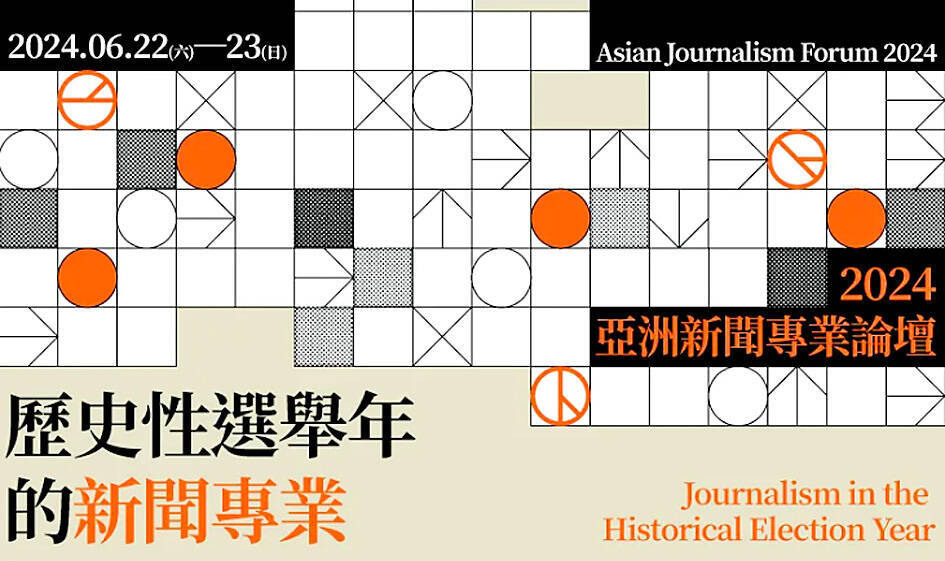
The 10th in-person edition of the Asian Journalism Forum, organized by the Foundation for Excellent Journalism Award (FEJA), was held on June 23 and 24 at the National Taiwan University College of Law Tsai Lecture Hall. With the theme “Journalism in the Historial Election Year”, the forum stressed the need to improve media literacy given the prevalence of misinformation and disinformation, and a general public that increasingly obtains their news coverage from social media.
FEJA Chairman Su Tzen-Ping (蘇正平) said in his opening remarks that in 2024, over 70 countries worldwide will either be holding or have held elections involving approximately 4.2 billion people. He pointed out that while elections are an important tool in the democratic process, voting decisions are greatly influenced by the information voters receive. This only underscored the role the media plays and the many changes occurring in the media ecosystem.
The forum featured six sessions on topics such as the geopolitical effect of election outcomes in various countries, methods for identifying and mitigating the spread of misinformation, the continued impact of populism on media and modern democracy, and the growing influence of social media and AI technology on journalistic practices.
Highlights of the discussions include the challenges of keeping traditional journalism relevant and competitive against social media news sources. Experts suggest that success hinges on building a diverse media broadcasting system with a variety of sources, understanding one’s audience and news brand, and building engagement with the community. They added that it is also essential to strengthen internal fact-checking and other frameworks as a first-line defense against fake news.
Forum panels were moderated by board members of FEJA and leadership from Taiwan’s public broadcasting services, among them Radio Taiwan International’s own Chairperson Cheryl Lai. In addition to Taiwanese experts based at home and abroad, panelists from South Korea, Japan, China, Thailand, India, Indonesia, the Philippines, and Germany shared their perspectives on session topics.