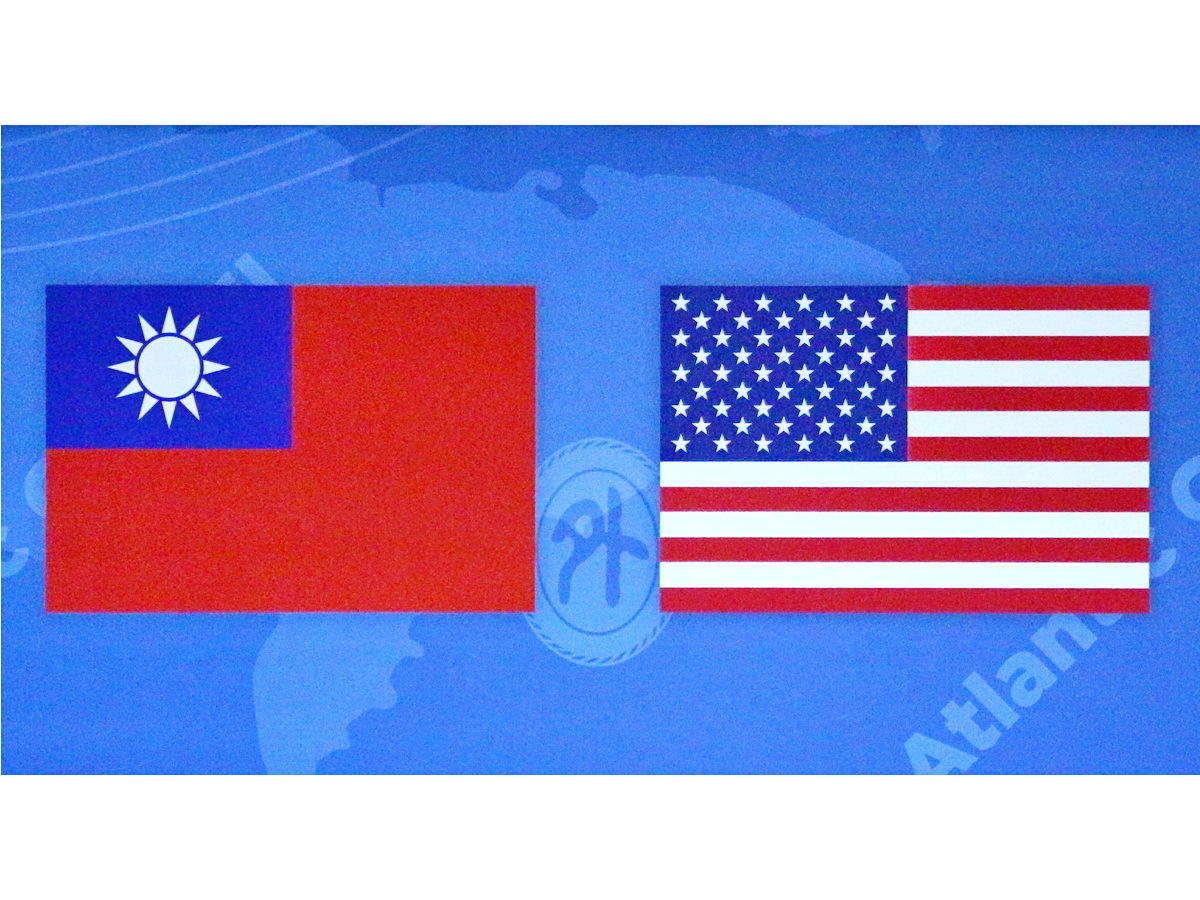
The Foreign Ministry responded to U.S. Republican presidential candidate Donald Trump’s statement that Taiwan should pay for American military protection this Thursday. While they had no comment on the content of his speech, ministry representatives emphasized that Taiwan has always strengthened self-defense at its own expense and that the U.S. government continues to abide by the Taiwan Relations Act and the Six Assurances.
Ministry representatives went on to say that, in addition to the U.S. State Department, former national security advisers and members from Congress and the House Committee on Foreign Affairs have all come forward to speak on the importance of Taiwan’s relationship with the U.S.
The Taipei Economic and Cultural Representative Office in the United States also released a statement reiterating that maintaining peace and stability across the Taiwan Strait is in the interest of the U.S. and the international community.
U.S. State Department spokesperson Matthew Miller said on Monday that Taiwan typically purchases weapons from the U.S. rather than relying on aid. The U.S. and its allies also maintain significant military assets in the region, in part to deter Chinese aggression against Taiwan.
When former U.S. President Trump’s national security adviser Robert O’Brien was asked about Trump’s comments during a Bloomberg Roundtable on Wednesday, he said he believed Trump meant it. He said that Taiwan should consider spending at least 5% of its gross domestic product (GDP) on military spending.
Although O’Brien is not part of Trump’s ongoing campaign and clarified that these are his personal views, he has maintained regular contact with Trump on national security issues.
According to the U.S. Congressional Research Service, Taiwan’s military spending increased from 2% of its GDP to 2.5% between 2017 and 2023. Taipei has announced a defense budget of approximately US$19.1 billion for 2024.
Despite the increase, these numbers still pale in comparison to China’s military spending; in March, Beijing unveiled an annual defense budget of about US$230 billion, a 7.2% increase from last year.