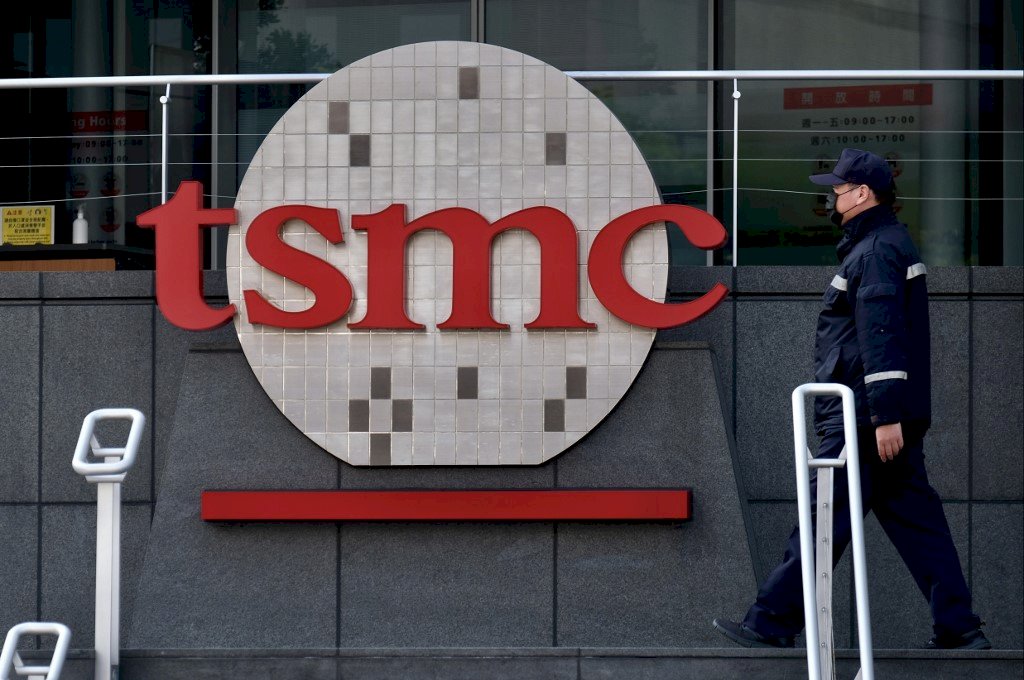
Taiwan’s world-leading semiconductor manufacturer TSMC will start construction on its new factory in Dresden, Germany on Tuesday. German Chancellor Olaf Scholz is scheduled to attend and deliver a speech at the commencement ceremony, along with TSMC’s Chairman and CEO C.C. Wei (魏哲家).
The company’s first European chip plant attracts widespread attention, but an industry expert warns of potential challenges due to differences in Western and Eastern cultures. Taiwan’s industry analyst Chen Tzu-ang (陳子昂) drew comparisons between TSMC’s plant in Germany and the recent Kumamoto, Japan factory, which was completed in just 18 months.
According to Chen, the Kumamoto plant was supported by both the local and central government in Japan, with measures like dedicated administration personnel and permits for 24-hour construction. The establishment of the plant has boosted the Japanese economy and local property prices which is welcomed by local residents. Citing the protests in the U.S. against traffic congestion, rising house prices and social disruptions, Chen doubted the Dresden plant will receive the same level of support as Kumamoto.
The Dresden plant is formally known as European Semiconductor Manufacturing Corp. (ESMC), a joint venture of 10 billion euros between TSMC and three top chipmaking companies Robert Bosch, Infineon, and NXP. TSMC holds a 70% stake with the other three investors each holding 10%. The plant will focus on automotive chips and is expected to boost the semiconductor supply chain in Europe.