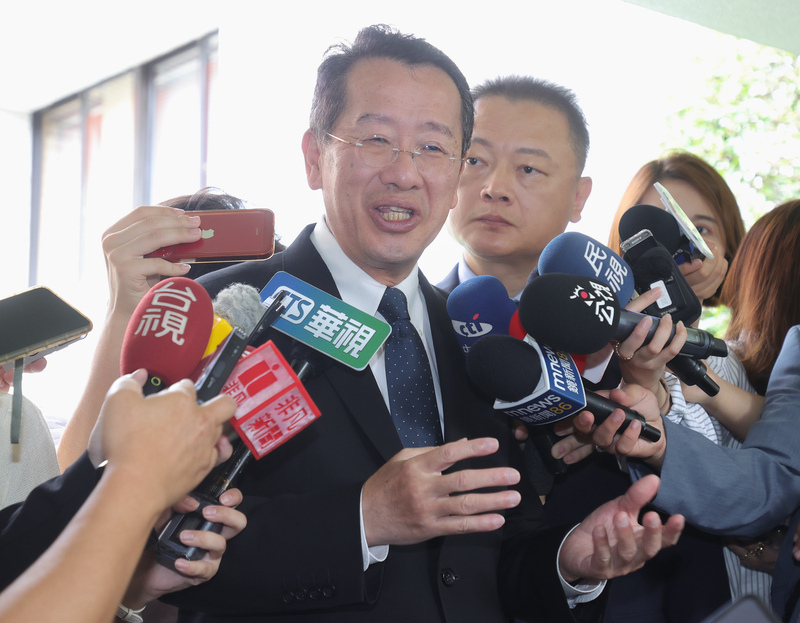
On Friday, Taiwan Defense Minister Wellington Koo (顧立雄) emphasized that Taiwan needs to enhance its self-defense capabilities in the face of continuing Chinese provocations in the Taiwan Strait, the South China Sea, and the Indo-Pacific region. This was in response to media inquiries about whether Taiwan should proceed with proposed U.S. military arms sales.
Koo mentioned that a U.S. business delegation is scheduled to visit Taiwan at the end of September, and military sales will depend on Taiwan's domestic capabilities, particularly in unmanned aerial vehicle technology. He said the Russia-Ukraine war highlights the importance of asymmetric warfare and adds that incorporating AI technology can play a significant role, especially for Taiwan's defense.
The Defense Ministry's focus is on developing asymmetric military capabilities through various means, including arms sales, commercial sales, and security assistance. However, an article by the U.S. think tank Cato Institute reveals that Taiwan is currently awaiting US$20.5 billion worth of U.S. weapons. The backlog of traditional weapons alone such as F-16 fighter jets and M1 tanks amounts to US$10 billion. There have also been concerns that military sales under the Biden administration are mostly for spare parts procurements rather than advanced weaponry, leading to speculation of U.S. restrictions on Taiwan's military.
In response, Minister Koo stated that Taiwan and the U.S. have consistently collaborated on military matters, and the U.S. will continue to strengthen Taiwan's national defense in accordance with its Taiwan Relations Act.