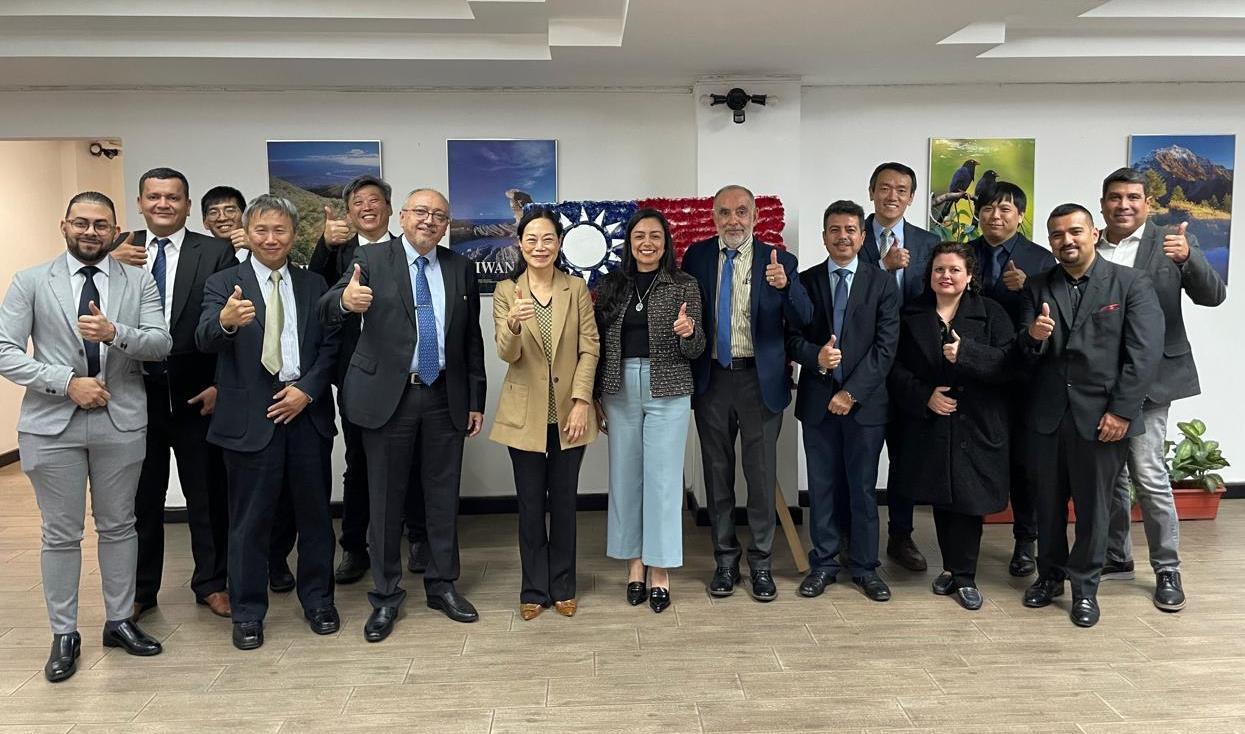
Experts from the Taiwan Space Agency (TASA) were invited to the 2024 International Forum on Applied Technology for the Detection and Diagnosis of Fusarium TR4 in Musacae in Guatemala. They shared their experience in the use of satellite remote sensing technology to monitor Fusarium Tropical race 4, a fungal disease affecting bananas and plantains, on farms in Guatemala and Belize.
Central America is the world’s largest banana exporter, with Guatemala’s banana export accounting for 10.8% of the world’s total and Belize’s banana industry accounting for 20% of the country’s agricultural output value. Fusarium TR4 is one of the most damaging pests to the banana genus and can cause a 100% yield loss on affected farms, making it a major threat to these valuable national industries.
Deputy Director of TASA’s Satellite Data Group Chang Li-yu (張立雨) explained that the FORMOSAT-5 satellite uses the degree to which plants reflect near-infrared light to determine whether they are growing normally. According to Chang, this project has been carried out in Guatemala and Belize for three years and has successfully controlled the occurrence of Fusarium TR4, setting a new precedent for the use of satellite image analysis to prevent and control banana diseases and pests.