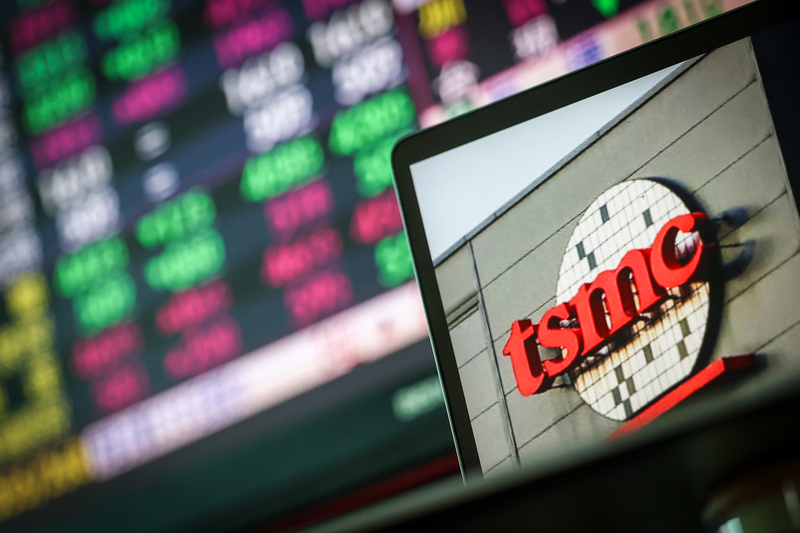
The U.S. Department of Commerce has further tightened its ban on advanced semiconductor technology for China, prohibiting the supply of AI chips with a structure width of 7 nanometers or less to all Chinese companies. Local experts estimate that the restrictions will primarily impact Chinese companies. Since TSMC’s foundry orders for 7nm AI chips from China were already limited, the revenue impact on TSMC should remain manageable.
Taiwan Industry Economics Services Director Liu Pei-chen (劉佩真) noted that while China accounts for 11% of TSMC’s exports, the proportion related to sub-7nm AI chips is minimal. TSMC’s main clients for AI chip foundry services are American companies, where demand remains robust. Though TSMC may lose some business from China, competitors like Intel and Samsung are also restricted by the U.S. ban and unable to take over these orders. Consequently, TSMC does not need to worry about competitors absorbing this missed revenue. Liu added, if Nvidia’s downgraded AI chips are still permitted for export to China, they could help offset the losses since they continue to use some of TSMC’s processes.
Foreign firms including Morgan Stanley, Citigroup, and research firm TrendForce have assessed the potential revenue impact on TSMC, predicting it will be minor, generally single-digit, losses, with TrendForce estimating a maximum potential impact of 8%.