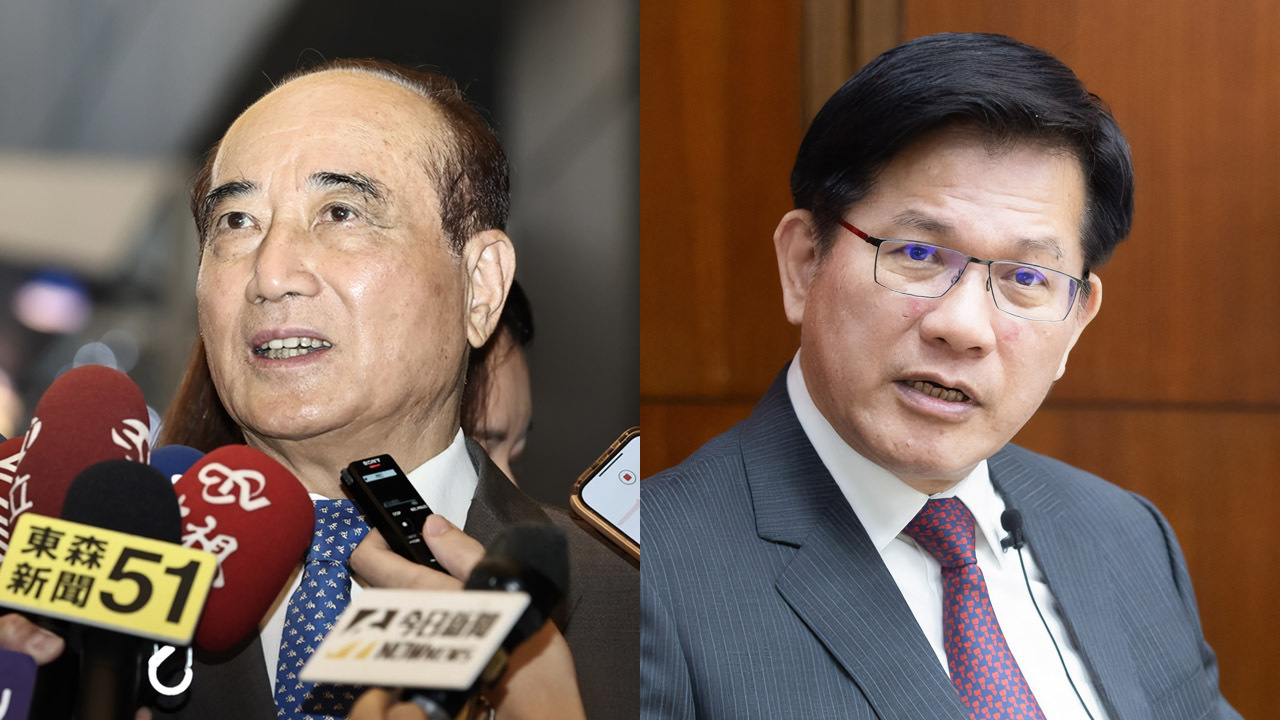
Former KMT Legislative Speaker Wang Jin-pyng (王金平) revealed a new cross-strait dialogue at the launch of his “Middle Way Peace-Alliance” think-tank on Monday, arguing for separation of government without separation of sovereignty.
Wang’s ideas state that Taiwan and China should both take a “practical” approach of embracing separate systems of government, which would work for the protection of constituent’s human and property rights on both sides, while agreeing to “undivided sovereignty”. He argues that a peaceful path forward can be reached this way, allowing both sides to work together while not ignoring the differences of history and current realities.
Several have also pointed out that Wang’s ideas bear a striking resemblance to those of former president Ma Ying-jeou (馬英九) in how they both advocate for mutual non-recognition of sovereignty nor denial of governance, as well as cross-strait relations that are not country-to-country relations.
Foreign Minister Lin Chia-Lung (林佳龍) responded that discussion about the semantic difference between governance and sovereignty would only foster confusion. Lin argued that the practical approach is to acknowledge Taiwan as a democratically independent nation whose “sovereignty belongs to her people” and pointed out that President Lai Ching-te (賴清德) has already published a cross-strait peace plan based on the “four commitments” and “four-pillar plan for peace”.
The DPP's China Affairs Department Head Wu Jun-zhi (吳峻鋕) also responded by citing that more than 80% of Taiwanese support the idea that they– not China– should be the ones deciding the future of the nation. A further 75% of Taiwan’s population believes in resisting attempts at annexation, both according to a recent poll by the Mainland Affairs Council. Wu stated that the DPP’s stance on cross-Strait relations has not changed and that the DPP has noted and will continue to monitor the intention of Wang’s statements.
KMT Chairman Eric Chu (朱立倫) offered support for Wang’s ideas, saying that all KMT cross-strait discussion is based on the Constitution, Cross-Strait Regulations, and party platform and constitution. He welcomed all who are willing to contribute to peaceful exchanges and dialogue.
Interior Minister Liu Shyh-Fang (劉世芳) also commented that she respects Wang’s views as an elder member of the KMT party and for being willing to sincerely come forward and share his ideas for cross-strait development and building Taiwanese consensus.