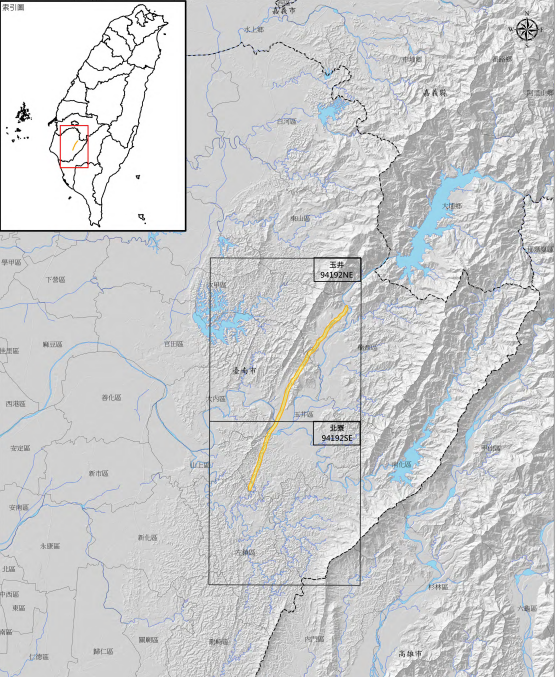
The Economics Ministry has announced three new geologically sensitive zones, including faults in Tainan, Taitung, and Nantou, to guide land development and boost disaster preparedness.
Taiwan, known for its frequent seismic activity, has recently announced three new active geological sensitive areas, or GSAs, according to the Economics Ministry. These areas, designated as active fault zones, include the Kouhsiao (口宵里) Fault in Tainan, stretching approximately 18 kilometers; the Lichi (利吉) Fault in Taitung, covering about 15.6 kilometers; and the Chuhsiang (初鄉) Fault in Nantou, spanning roughly 19.8 kilometers.
The identification and announcement of GSAs serve as critical references for land development and disaster prevention. The intention is to raise public awareness and encourage proactive measures.
Former Director of the Central Weather Bureau's Seismological Center Kuo Kai-wen (郭鎧紋) emphasized the importance of geological assessments in high-risk areas. He notes that during major earthquakes, surface ruptures can occur and extend to the ground level. Therefore, if there are plans to build houses or undertake large-scale development projects in these areas, comprehensive geological surveys are essential.
Experts categorize earthquake damage into two types: severe destruction near the epicenter and structural failures along fault lines. They also note that additional sensitive zones might still await designation. To alleviate concerns, the public is urged to maintain routine disaster preparedness and avoid undue worry.