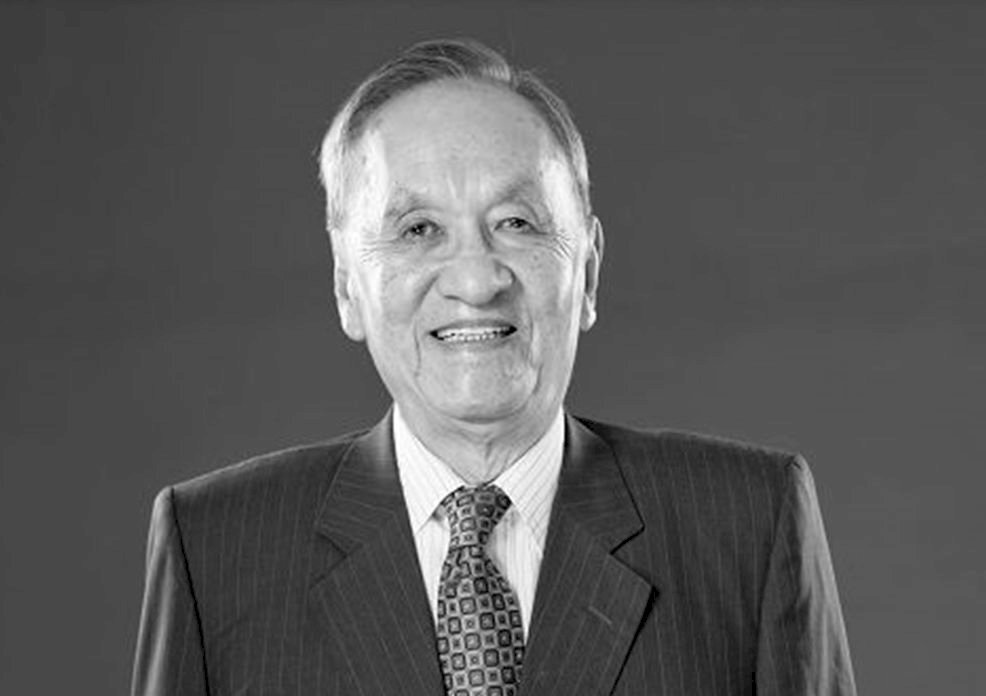
After being convicted of sedition and sentenced to eight years in prison for co-authoring the Declaration of Formosan Self-Salvation in 1964, late Taiwan independence and democracy advocate Peng Ming-min (彭明敏) has finally received posthumous justice. Earlier this month, the Ministry of Justice revoked Peng’s conviction, stating that his prosecution violated the principles of free and democratic constitutional order and the right to a fair trial.
In 1964, Peng, then a professor in the Department of Political Science at National Taiwan University, co-wrote the Declaration of Formosan Self-Salvation with his students Hsieh Tsung-min (謝聰敏) and Wei Ting-chao (魏廷朝). The declaration called for Taiwan’s democracy and freedom. Under the authoritarian KMT government, a military court found the trio guilty of sedition, sentencing Peng and Wei to eight years in prison and Hsieh to ten years.
Peng escaped Taiwan in disguise in 1970 while under secret agent surveillance. He spent over 20 years in exile before returning to Taiwan. He later ran as the Democratic Progressive Party's presidential candidate in the 1996 election.
Peng passed away in 2022, never having sought judicial redress for his wrongful conviction. In 2023, the Peng Ming-min Foundation applied a reversal on his behalf. The justice ministry’s recent decision revokes all criminal penalties associated with the 1964 case, recognizing them as a judicial injustice.
Lo Chun-hsuan (羅浚晅), a board member of the Peng Ming-min Foundation, called the revocation "not only justice delayed but also a significant step in Taiwan's journey toward transitional justice."
Lo emphasized that the spirit of the Declaration of Formosan Self-Salvation, initiated by Peng and his students, continues to inspire Taiwanese people to uphold the values of democracy and freedom.