Veterinarians are the most important element of any industry involving animals. The recent introduction of artificial teaching aids at the National Chung Hsing University College of Veterinary Medicine is better training our future animal doctors and reducing the need for live studies.
Traditional veterinary studies usually rely on live animals or cadavers for practice, but the National Chung Hsing University (NCHU) College of Veterinary Medicine has introduced artificial animal teaching aids to not only reduce the use of live animals but also improve clinical skills.
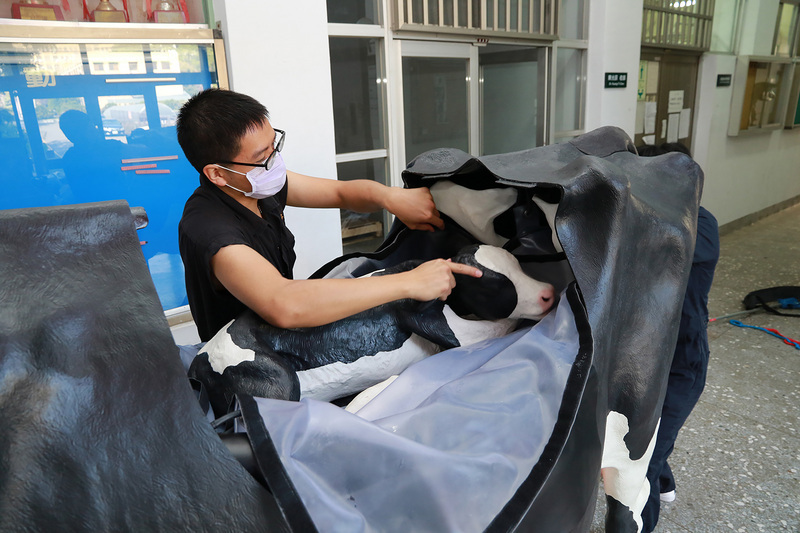
Several people work together with a cow experiencing labor difficulties. The veterinarian successfully delivers the calf, but most students don’t have the opportunity to experience such an event.
NCHU Veterinary Medicine Department Director Jacky Peng-Wen Chan (陳鵬文) describes that the new teaching aids’ appearance and internal structures are lifelike enough for students to feel an abnormal fetal position and help the “cow” through labor.
On a canine teaching aid, NCHU Veterinarian Shia Wei-Yau (夏偉堯) points out how the ear canal and trachea are biologically accurate for students to practice examination and intubation. NCHU has also developed a fish blood draw simulator with artificial blood vessels.
Both live animals and students experience stress when in a learning environment, bringing animal welfare into question. Artificial teaching tools allow students to practice standard operations repeatedly without any harm to living subjects.
NCHU veterinary medicine students talk about how first understanding anatomy on the teaching aids reduces the nerves and increases confidence when they begin real examinations and operations, promoting paw-sitive animal treatment through education.