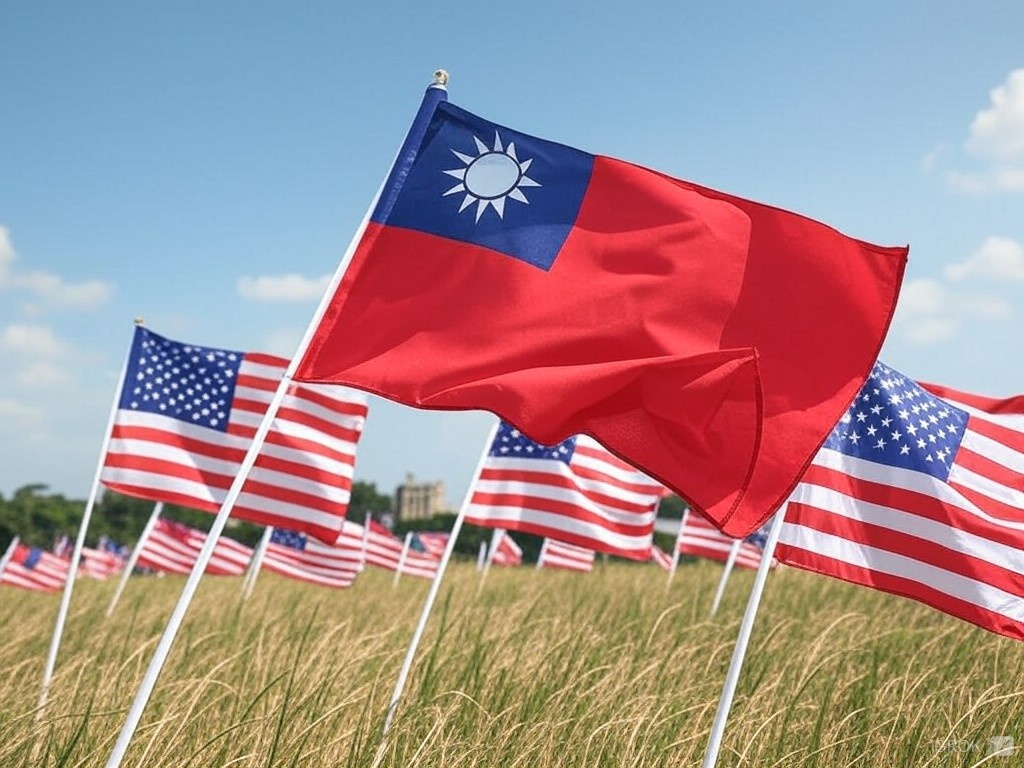
The Institute for National Defense and Security Research conducted a public opinion survey to assess the potential impact of U.S. President-elect Donald Trump on Taiwan's defense and foreign policies. The survey, carried out by National Chengchi University's Election Study Center, interviewed 1,138 respondents.
The findings reveal that while nearly half (47%) of respondents believe U.S.-Taiwan relations will remain unchanged, 24% think they will deteriorate, and only 12% foresee improvement. This reflects a general perception of Trump's unpredictability and a lack of confidence in the stability of U.S.-Taiwan relations.
During his campaign, Trump claimed that Taiwan is stealing U.S. semiconductor business and that the island should allocate more spending on defense. These remarks were addressed in the survey results.
When asked whether Taiwanese chipmakers should expand operations in the U.S., 38% supported the idea, while 49% opposed it, highlighting a significant divide in public opinion.
Regarding domestic defense spending, 47% of respondents supported budget increases, 37% favored maintaining current levels, and only 10% advocated for cuts. However, opposition to increased defense spending exceeded 50% if it required cuts to education, economic development, social welfare, or necessitated higher taxes. Compared to a similar survey in September 2024, support for increasing the defense budget has noticeably declined.
Despite Trump’s earlier remarks on the cost of Taiwan’s defense and his ambiguous stance on defending the island, nearly half (49%) of respondents believe the U.S. would intervene in the event of a cross-strait conflict. This is consistent with previous surveys, reflecting unchanged confidence in America's security commitments to Taiwan.