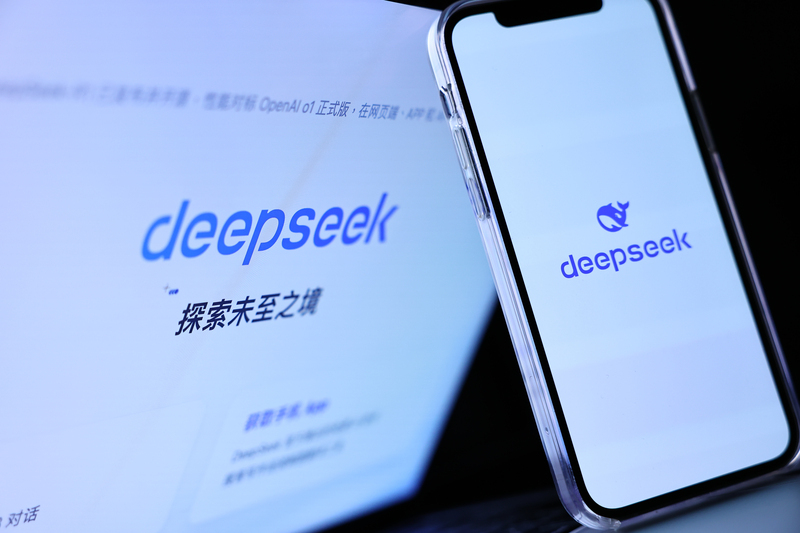
According to analyses by cybersecurity software company Trend Micro Inc., China’s new open source generative AI model DeepSeek R1 has numerous security flaws and is more susceptible to jailbreaking techniques than ChatGPT. Experts believe that as long as the computer to which it is downloaded has internet access, there is a risk of data leakage.
DeepSeek R1 has created a stir in the tech world and stock markets since its release in January. It has demonstrated the ability to solve complex math, coding, and logic problems, rivaling the performance of OpenAI’s ChatGPT o1 model. However, since user data is stored in Chinese servers, several countries have acted quickly to restrict or ban its use in government cyberinfrastructure, citing possible security risks.
Trend Micro Senior Manager Stephanie Zhou (周曼如) explained that any computer with an internet connection can transmit data and is vulnerable to network security problems such as hacker attacks; AI models only increase these risks. She mentioned that during their internal evaluation of the model, they found DeepSeek R1 is not only more likely to generate biased and harmful content, but also more likely to provide information that may assist in the creation of bombs or other weapons.
Director of the Institute for Information Industry Ku Chen-hao (顧振豪) added that currently, they have no way to confirm whether there is a “backdoor” in the program code capable of transmitting data. He said that until the source code has undergone information security review, it should be used as little as possible, or in a completely closed experimental mode.
Both experts stressed that security issues are not unique to DeepSeek R1 and that any large language model is at risk of abuse, warning users never to input sensitive information into any AI model.