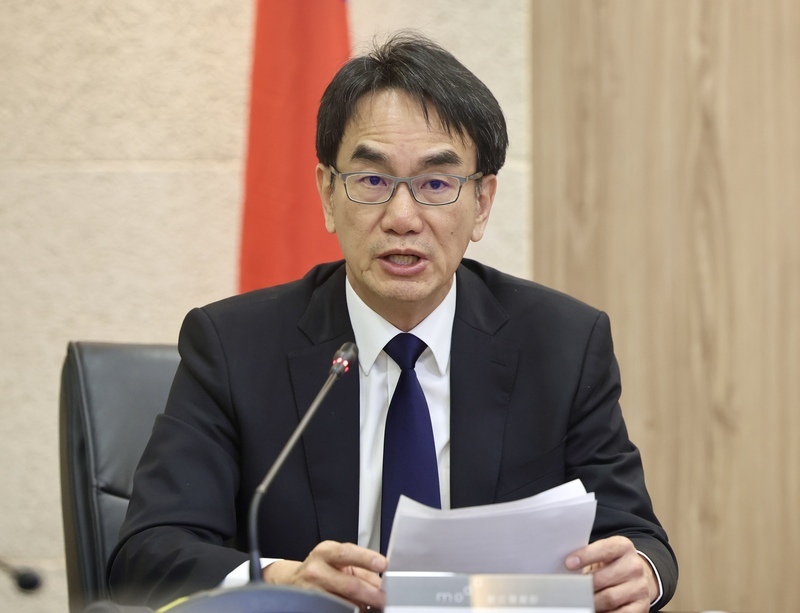
The Digital Ministry is working to establish a “Taiwan Sovereign AI Training Corpus”, relax copyright laws, and provide a free training corpus to large language models (LLMs) for distribution to introduce Taiwanese viewpoints to these models, and reduce copyright disputes between content owners and AI manufacturers.
Training generative AI requires vast amounts of data; however, data in traditional Mandarin characters is difficult to obtain thanks to copyright. Digital Ministry Deputy Minister Lin Yi-jing (林宜敬) shared that the biggest challenge when developing generative AI is not technology, but political and legal challenges. For the LLMs in the United States, developers are not worried about the financial cost, rather the time and negotiation costs. Lin says if a corpus of traditional characters and Taiwanese viewpoints cannot be provided, then they will choose instead to avoid content from Taiwan.
In terms of the content of the corpus the ministry is building, unlike the international practice of providing it to OpenAI in the form of licensing fees, the Digital Ministry is planning to provide it on a voluntary basis, prioritizing material that is not copyrighted, or for which the rights have already been obtained. Examples include, but are not limited to, prose, commentaries, poems, essays, biographies, and government copyrighted non-confidential documents, such as policy plans, research reports, and government publications.
Lin says that if no traditional Mandarin content is provided, simplified Mandarin content will become the default– an unideal situation for Taiwan. Lin emphasized the importance of providing traditional Mandarin content as soon as possible, likening it to an emergency. He said the government can first provide what it has, and that a consensus can be reached among the private sector wotking with the Legislature, the media, and the public to provide more. The process of reaching such a consensus is currently estimated to take upwards to two years