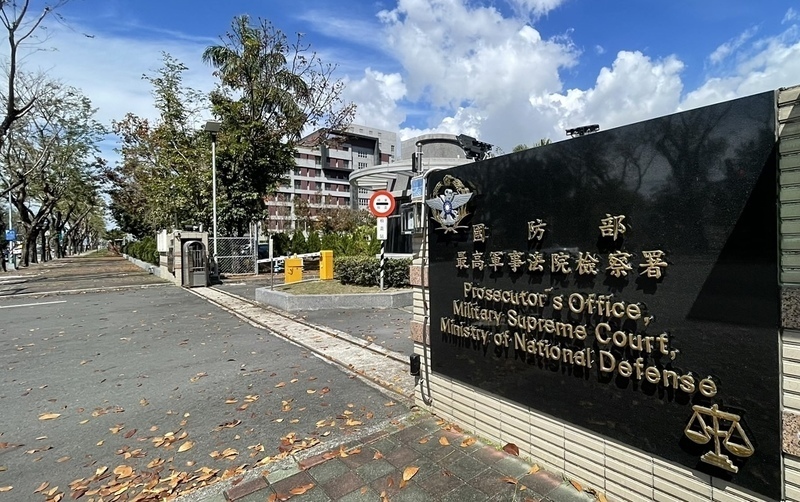
In response to the recent spike of Chinese espionage cases involving Taiwanese veterans, President Lai Ching-te (賴清德) announced on Thursday after a meeting with the National Security Council that his government will work on reinstating military trials, putting future active-duty military personnel who break the Criminal Code of the Armed Force on military trials.
Lai says that many citizens have expressed their concerns upon seeing military officers being recruited by China to sell intelligence and form armed groups with plans to harm their own country and people. Last year, active-duty and retired military personnel accounted for a significant portion of espionage-related prosecutions, with 15 active-duty personnel (23%) and 28 retired personnel (43%), making up a combined 66% of all espionage cases.
Lai adds that military judges will be working with prosecutorial and judicial authorities to handle criminal cases involving active-duty military personnel accused of treason, aiding the enemy, leaking state secrets, dereliction of duty, and insubordination.
The president says that his administration is also working on complementary reforms, including the establishment of the Military Judges Personnel Act and amendments to the organizational laws of the military courts and military prosecution.
Once the plan is finalized through thorough discussion, the Defense Ministry will provide a comprehensive explanation and communicate with the public to ensure that the reinstatement of the military trial system gains trust and support from the public.
Defense Ministry’s Legal Affairs Department Director-General Shen Shih-wei
(沈世偉) told reporters on Thursday that all of the military judicial cases have been transferred to the civilian judiciary since the amendment of the Military Trial Act in 2013, leaving only wartime trial functions intact. Shen says that upon review, the ministry concluded that maintaining a functioning military judicial system in peacetime is essential to a smooth transition between peacetime and wartime military trials.
Taiwan’s military trial system was suspended in 2014 following the death of Hung Chung-chiu (洪仲丘), a 23-year-old army specialist who died while serving a detention sentence during his conscription service. Military Minister Wellington Koo (顧立雄) served as one of Hung’s defense counsel. Shen said that Koo’s experience as a human rights lawyer will ensure a just reinstatement that follows the principles of fairness and due legal process.