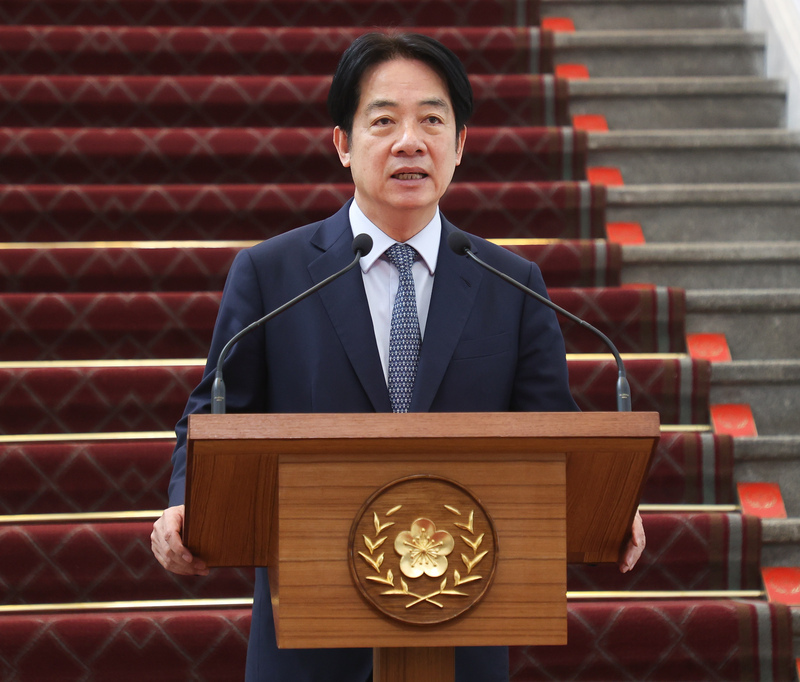
President Lai Ching-te (賴清德) outlined five major national security and united front threats China poses to Taiwan: the threat to national sovereignty, infiltration and espionage activities targeting Taiwan’s military, obscuring the national identity of the people of Taiwan, united front infiltration into Taiwanese society through cross-strait exchanges, and using “integrated development” to attract Taiwanese businesspeople and youth. In addition to the threats, Lai also proposed 17 response strategies last week.
At a Cabinet meeting this Thursday, Premier Cho Jung-Tai (卓榮泰) revealed that he had already instructed relevant government agencies to formulate plans according to Lai’s response strategies, which are expected to be drawn up before next Tuesday.
Vice Premier Cheng Li-chiun (鄭麗君) will summarize the response plans at the end of March. Moving forward, Cho has requested that regular assessments be conducted based on details of each meeting and followed-up accordingly.
Li noted that some legislation may need to be amended, including the Military Trial Law and Anti-Infiltration Act. She said the government will substantially revise parts of the trial that have been criticized in the past, and strengthen the professional training and independence of military judges to create a new system that complies with the principles of fair trial and due legal process.